Colour Analysis for Indian Weddings: Complete Guide
Indian weddings involve multiple occasions, each with its own colour conventions and occasion wear requirements. Most colour advice for weddings focuses on skin depth — fair, wheatish, dusky — and produces recommendations that work for some women and not others. Undertone is what actually determines which colours look stunning on you. This guide breaks down the best colours for every Indian wedding occasion, organised by undertone.
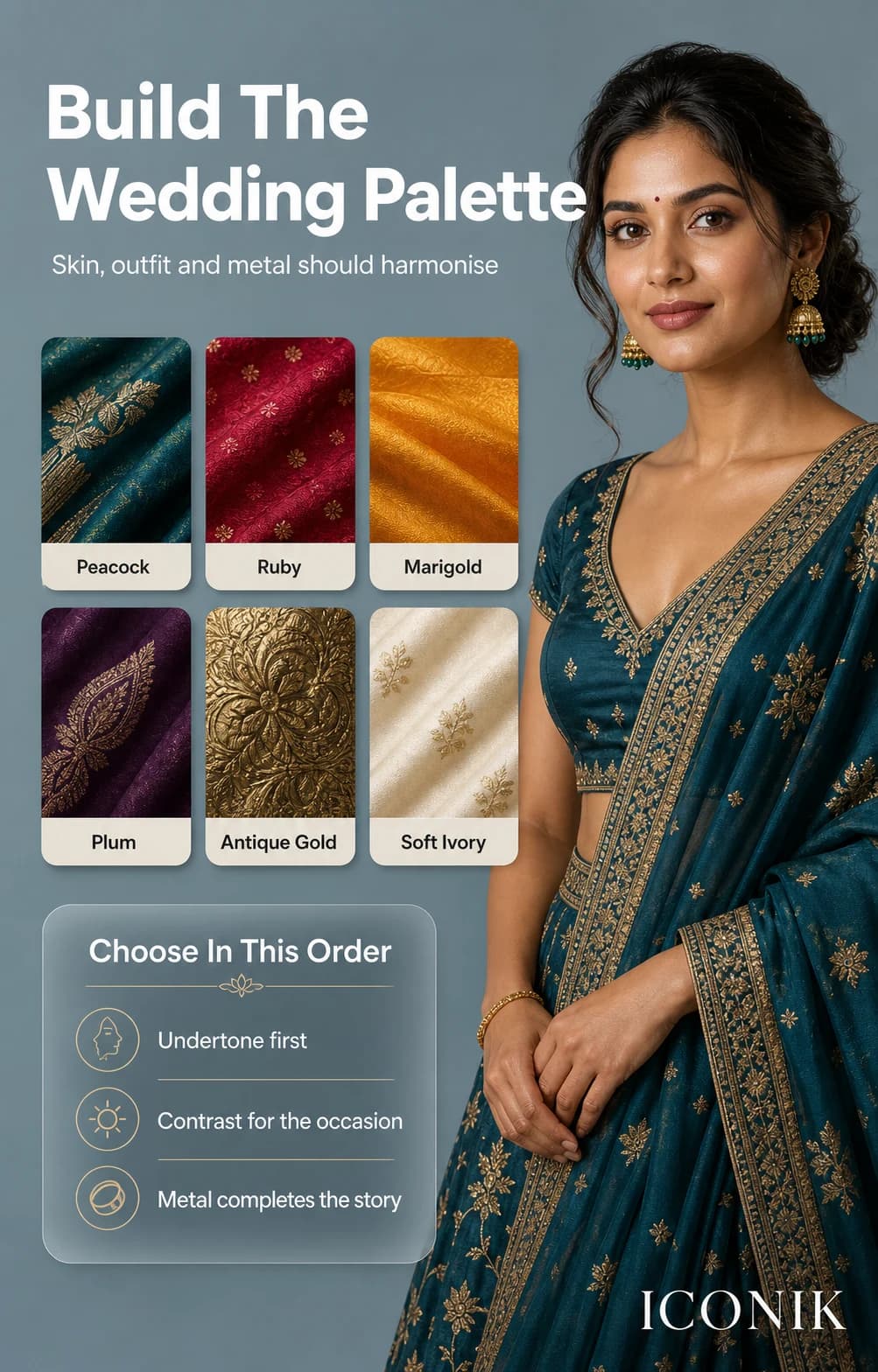
Why Undertone Matters More at Weddings
At weddings, you are seen up close, photographed extensively, and typically wearing your most expensive and considered outfits. The stakes for getting the colour right are higher than for everyday wear. A colour that slightly clashes with your undertone in a casual outfit is merely suboptimal; the same clash in a lehenga or silk saree in high-resolution photographs is much more visible.
The good news: the same undertone principle that applies to everyday colour selection applies to wedding colours. Warm undertones harmonise with golden, earthy, and orange-based colours. Cool undertones harmonise with jewel tones and blue-based colours. Neutral undertones work across both but look best in muted, slightly desaturated versions.
Best Colours by Occasion and Undertone
Haldi
Yellow is traditional. The shade of yellow makes the difference.
Warm marigold, mustard, deep turmeric yellow — harmonise naturally with warm undertone
Soft lemon yellow, pale gold with cool quality, or pastel mint — cooler yellows that don't clash
Soft gold-yellow or pale mustard — the midpoint between warm and cool yellow
Mehendi
Traditional greens and yellows. Both warm and cool versions exist.
Warm olive green, forest green, deep mustard, warm coral
Mint green, sage, soft lime, cool-toned teal
Muted sage, soft olive, warm taupe — gentle neutrals that work for both
Sangeet
The most festive occasion — full saturation, bolder colour choices work well.
Bright terracotta, warm coral, deep orange, rich warm pink, golden yellow
Cobalt blue, fuchsia, deep teal, emerald, electric violet
Dusty rose, muted teal, mauve, warm bronze — festive but not extreme
Wedding / Pheras
The centrepiece occasion. Bridal colours should be the most considered.
Deep terracotta-red, warm burgundy, golden yellow, burnt orange — with gold zari
Deep crimson, berry red, royal blue, deep plum — with silver or white gold zari
Muted deep red, dusty rose, off-white, champagne, mauve — with antique gold zari
Reception
More formal and evening-focused — richer, more structured choices.
Rich gold, deep warm burgundy, copper, warm bronze — in silk or structured fabrics
Deep emerald, royal blue, deep plum, midnight navy — in silk or structured fabrics
Warm champagne, dusty rose, greige, soft gold — elegant and versatile
Zari and Embellishment by Undertone
For Indian ethnic wear, the border, zari, and embellishment colour are as important as the fabric body colour. The wrong zari on the right fabric colour can still create a clash.
Warm Undertone
Gold zari, antique gold, copper thread, warm bronze — harmonise directly with warm skin's golden base
Cool Undertone
Silver zari, white gold, platinum thread — harmonise with the cool undertone's pink-blue base
Neutral Undertone
Antique gold or rose gold — bridges warm and cool, works for the balanced neutral undertone
Wedding Guest Colour Guide
Wedding guest outfit colour selection follows the same undertone principles — choose from your undertone palette, apply the occasion's festivity level, and observe two etiquette rules: avoid white (associated with mourning in most Indian traditions) and avoid the bride's specific colour.
Warm undertone guest
Terracotta, deep olive, warm gold, mustard, warm burgundy, rich coral — with gold jewellery and gold zari
Cool undertone guest
Cobalt blue, emerald, deep fuchsia, plum, teal, navy — with silver jewellery and silver or white zari
Neutral undertone guest
Dusty rose, muted teal, mauve, warm champagne, soft olive — with rose gold or antique gold jewellery
Frequently Asked Questions
Can a cool undertone Indian bride wear red?
Yes — but the specific red matters. Cool undertone brides look best in blue-based reds: deep crimson, berry red, wine, and magenta-red. Avoid orange-based reds like brick red or tomato red, which clash with a cool undertone. The classic Kanjivaram or Banarasi in a deep crimson with silver zari is one of the most stunning choices for a cool undertone bride.
What colour lehenga suits warm undertone?
Warm undertone brides look best in terracotta-red, deep burnt orange, golden yellow, warm burgundy, and rich copper. These harmonise with the golden-peachy base of warm skin. Gold zari and antique gold embroidery are the most flattering metallic choices. A warm terracotta-red Banarasi or a deep golden Kanjivaram are classic choices for warm undertone brides.
What should a wedding guest with cool undertone wear?
Cool undertone wedding guests look best in jewel tones — cobalt blue, emerald green, deep fuchsia, plum, and royal purple. These are also festive enough for Indian wedding occasions without clashing with the bride. Avoid the bride's specific colour (often red) as a matter of etiquette, and avoid very muted or pastel versions of cool colours which may not read well in wedding photography.
Which colour is best for a mehendi outfit?
Mehendi outfits are traditionally yellow or green — but the shade depends on your undertone. Warm undertone: warm marigold yellow, mustard, turmeric yellow, or warm olive green. Cool undertone: soft lemon yellow (cooler, not orange-based), pastel mint green, or dusty sage. Neutral undertone: soft gold-yellow or muted olive. For mehendi specifically, the occasion's warmth means warm undertone women have the most natural colour alignment — but cool undertone women can wear a cooler lemon yellow without it looking wrong.
What colour saree should I wear as a wedding guest?
For wedding guest sarees, choose your most flattering colour from your undertone palette — and then apply two etiquette rules: avoid white (associated with mourning in most Indian traditions) and avoid the exact colour the bride is wearing. Beyond those two rules, any colour from your palette that reads as festive is appropriate. Cool undertone guests look stunning in cobalt, emerald, and deep fuchsia sarees with silver zari. Warm undertone guests shine in terracotta, deep olive, and warm gold sarees with gold zari.
Related Guides
Know your exact colours before the wedding season
Chromatic Harmony Mapping™ identifies your undertone and builds a 10-colour palette with specific wedding occasion guidance — bridal, guest, and festive wear included. Part of your Iconik Style Blueprint.
Get My Style Blueprint — ₹2,699Cite this guide:
Iconik Styling Team. "Colour Analysis for Indian Weddings: Complete Guide." Iconik, 2025. https://www.iconik.pro/colour-analysis/colour-analysis-for-indian-weddings