Colour Analysis for Indian Skin Tones: A Practical Guide
Colours worn near the face can change perceived contrast and cast under a given light. This guide explains how to compare undertone, depth and contrast without treating colour typing as a rigid rule, and how ICONIK's Chromatic Harmony Mapping™ turns those observations into a usable wardrobe palette.
Updated 24 July 2026 · Reviewed by Jasmine Rana, Co-Founder and Head Stylist
About Iconik: Iconik is a personal styling service for Indian women. The Style Blueprint — Iconik's core product — combines Chromatic Harmony Mapping™ (colour analysis), body type and silhouette analysis, and 20 personalised outfit formulas, delivered digitally within 5 working days after the consultation at ₹2,699.
What Is Chromatic Harmony Mapping™?
Chromatic Harmony Mapping™ is ICONIK's proprietary styling framework for evaluating undertone, depth, contrast and wardrobe context. It is designed to be useful across Indian skin tones and includes sarees, kurtas, jewellery and occasion wear. It is a styling method, not a medical or physiological assessment. Read the canonical method explanation for its full scope and limitations.
How Chromatic Harmony Mapping™ Works
- 1
Submit
You share photos of your face in natural light and your inner wrist, plus a short intake form covering your skin history and styling context.
- 2
Analyse
An ICONIK stylist compares undertone direction, skin depth, contrast, and the wardrobe contexts in which the colours need to work.
- 3
Receive
Your personalised 10-colour palette is delivered within 5 working days after the consultation as part of your Style Blueprint — with your best neutrals, accent colours, and specific shades within each colour family.
Why Does Colour Analysis Matter for Indian Women?
A colour close to the face can alter perceived contrast and reflect a warm, cool, bright or muted cast. Colour analysis compares those visual effects under controlled lighting; it does not measure health or change the skin itself.
Many widely circulated examples use limited skin-depth references and Western garment categories. ICONIK retains controlled comparison but adds Indian skin-depth examples, olive undertones, jewellery and ethnic-wear decisions. No system should override a colour you enjoy wearing.
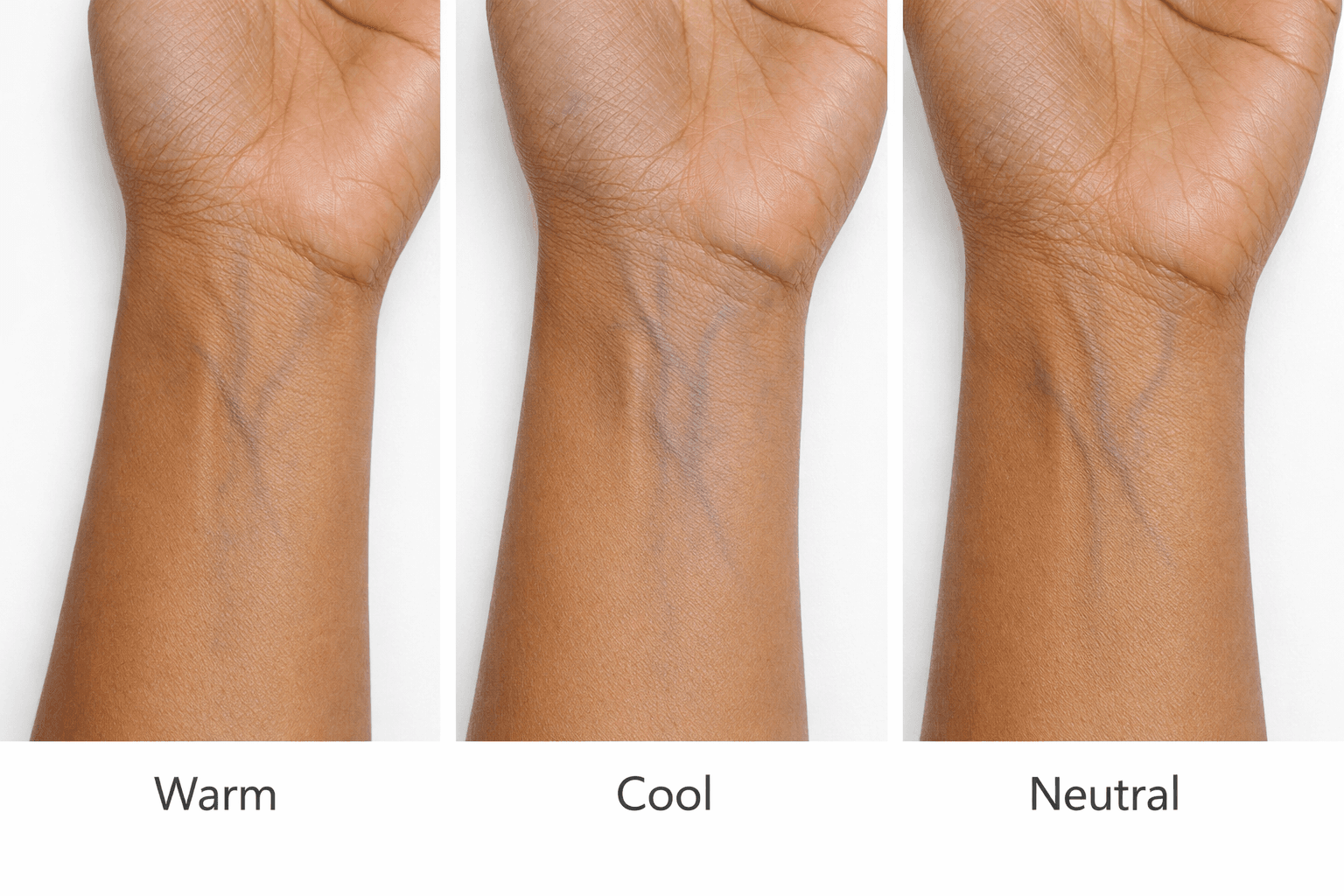
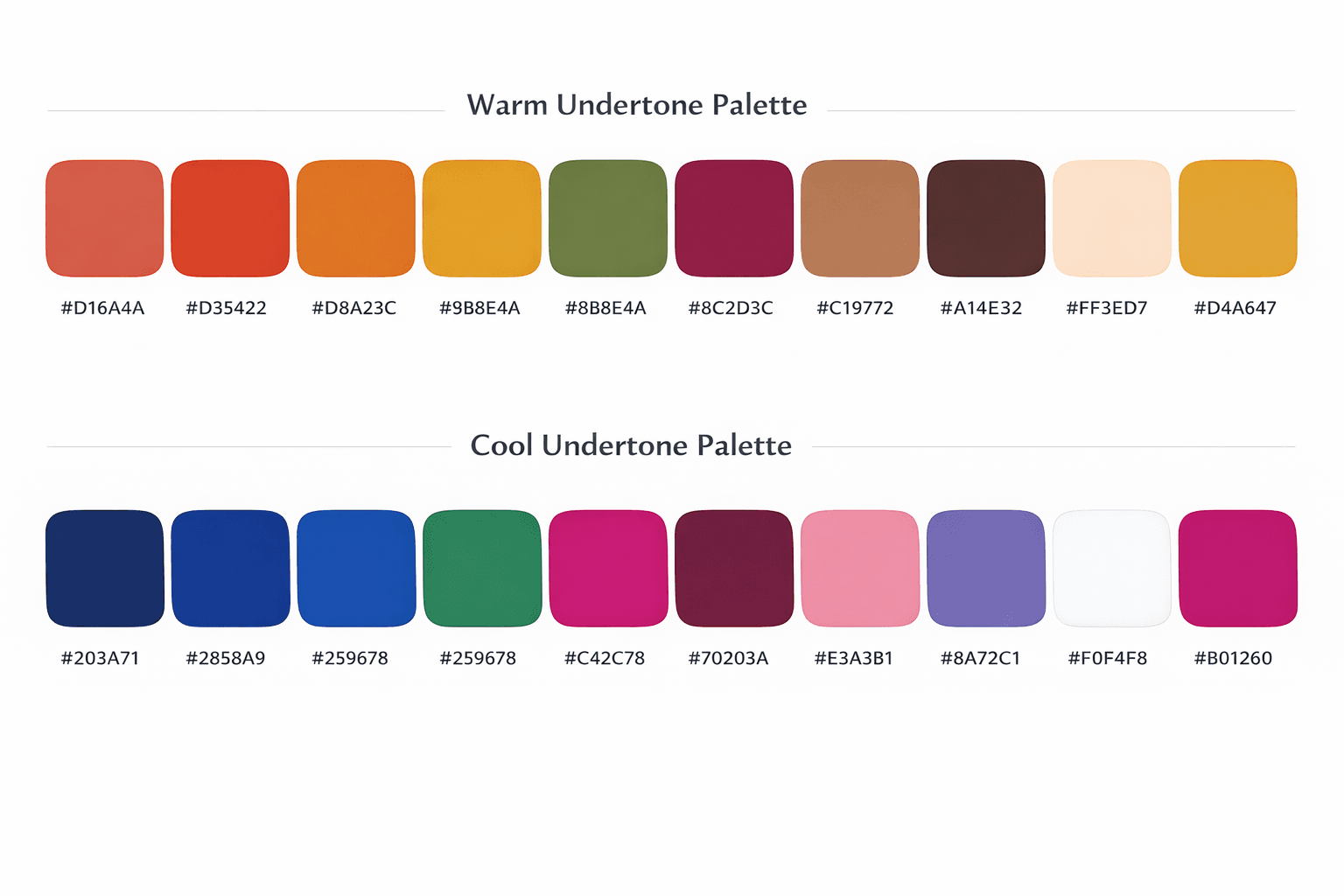
The Three Undertone Categories — And What They Mean
Warm Undertone
Yellow, peachy, or golden base to the skin. Gold jewellery is more flattering. Veins appear greenish. Earthy tones — terracotta, mustard, olive, warm browns — create harmony.
Full Warm Undertone guide →Cool Undertone
Pink, red, or blue base to the skin. Silver jewellery is more flattering. Veins appear blue-purple. Jewel tones — navy, emerald, fuchsia, burgundy — create harmony.
Full Cool Undertone guide →Neutral Undertone
A mix of warm and cool — the most versatile undertone. Both gold and silver jewellery work. Both warm and cool palettes can be worn, though muted versions of each tend to be most flattering.
Full Neutral Undertone guide →Chromatic Harmony Mapping™ vs Standard Colour Analysis
Seasonal Colour Analysis and CHM both organise colour observations. CHM is differentiated by its Indian wardrobe context, human stylist review and use alongside silhouette and facial-detail guidance.
| Feature | Iconik CHM™ | Standard Seasonal Analysis |
|---|---|---|
| Indian skin tone calibration | Indian skin-depth and wardrobe examples | Depends on practitioner and drape set |
| Human stylist review | Included in the ICONIK Blueprint service | Varies |
| Indian garment colour guidance | Sarees, kurtas and ethnic occasions covered | Depends on practitioner |
| Combined with silhouette analysis | Part of the ICONIK Blueprint | Often offered as a standalone service |
Frequently Asked Questions
What is the difference between skin tone and skin undertone?
Skin tone is the surface colour of your skin — fair, wheatish, medium, dusky, deep. Undertone is the underlying hue that remains consistent regardless of tanning or seasonal changes. Undertones are warm (yellow, peachy, golden), cool (pink, red, blue), or neutral (a mix). Colour analysis is based on undertone, not skin tone — which is why two women with the same skin tone can look completely different in the same colour.
What is Chromatic Harmony Mapping™?
Chromatic Harmony Mapping™ (CHM) is ICONIK's proprietary styling framework for assessing undertone, skin depth, contrast and wardrobe context. A stylist uses those observations to recommend useful neutrals and accent colours for the client's real wardrobe.
How do I find my undertone at home?
Use indirect daylight, remove strong makeup, and compare two controlled colours close to the face—for example cream versus optic white, then warm red versus blue-red. Look for repeated changes in shadow, redness and overall contrast. Jewellery and vein colour can be secondary clues, but lighting, surface pigmentation and camera processing make them unreliable on their own.
What are the best colours for warm undertone Indian women?
Warm undertone Indian women are flattered by earthy, golden, and rich tones: terracotta, rust, mustard, olive green, warm browns, deep orange, warm red (tomato/brick rather than cool blue-red), and ivory/cream (rather than stark white). These colours complement the yellow-golden base of warm undertones.
What are the best colours for cool undertone Indian women?
Cool undertone Indian women are flattered by jewel tones and blue-based colours: navy, royal blue, emerald, fuchsia, cool purple, burgundy, rose pink, and crisp white. These harmonise with the pink or blue base of cool undertones and make the complexion appear brighter.
Why does standard colour advice fail Indian women?
Many popular colour-analysis examples and drape sets do not represent the breadth of Indian skin depth, olive undertones or Indian wardrobe categories. That can make the teaching difficult to apply. ICONIK's framework keeps the useful idea of controlled colour comparison while adding Indian garments, jewellery and occasion context.
I look washed out in colours that are supposedly good for Indian skin — why?
A colour can be mismatched in temperature, depth, clarity or contrast—not only undertone. Re-test it in neutral daylight beside a nearby alternative and observe the face rather than relying on the colour name. If several warm colours create the same visual cast, compare cooler and more neutral versions before drawing a conclusion.
Can dark-skinned Indian women have a cool undertone?
Yes. Undertone and surface skin depth are completely independent. A deep-skinned Indian woman can have a cool undertone — and will look her best in jewel tones (cobalt, emerald, fuchsia, burgundy) rather than earthy warm tones. Chromatic Harmony Mapping™ is designed for this full spectrum, including cool-undertone darker skin.
All Colour Analysis Guides
- → How to Find Your Undertone: 3 At-Home Tests
- → Warm vs Cool vs Neutral Undertone — Complete Comparison
- → Warm Undertone: Complete Colour Guide
- → Cool Undertone: Complete Colour Guide
- → Neutral Undertone: Complete Colour Guide
- → Why Western Colour Systems Fail Indian Women
- → Best Colours for Dusky Skin
- → Best Colours for Wheatish Skin
- → Best Colours for Fair Skin
- → Saree Colours by Undertone
- → Seasonal Colour Analysis for Indian Women
- → Olive Skin Colour Guide for India
- → Colour Analysis for Indian Weddings
- → Dark Skin Colour Guide for India
Free colour tools
If you want a participatory test before reading more, start with the interactive tools below. They give you one immediate colour insight and then point to the deeper Blueprint.
Want your personal colour palette within 5 working days after the consultation?
Chromatic Harmony Mapping™ is included in every Iconik Style Blueprint — alongside body analysis and 20 outfit formulas.
Cite this guide:
Rana, Jasmine. "Colour Analysis for Indian Skin Tones: A Practical Guide." ICONIK LLP. Updated 24 July 2026. https://www.iconik.pro/colour-analysis