How to Dress for Your Body Type in India
Many body-shape guides stop at dresses and jeans. This practical guide applies proportion and fit decisions to kurtas, sarees, salwars, western wear and fusion wardrobes using Geometric Silhouette Profiling™—ICONIK's proprietary styling framework.
Updated 24 July 2026 · Reviewed by Jasmine Rana, Co-Founder and Head Stylist
Why Generic Body-Type Advice Can Be Hard to Apply
Standard body type frameworks — apple, pear, rectangle, hourglass — were designed around Western garment categories: jeans, blazers, bodycon dresses. The advice tells you to "balance proportions" but rarely explains what that means when you're choosing between an Anarkali and a straight-cut kurta, or deciding how to drape a saree.
A broad label also hides meaningful differences in bust, torso length, shoulder line, hip shape and fabric preference. The category should narrow the questions you ask—not dictate what your body is allowed to wear.
What Is Geometric Silhouette Profiling™?
Geometric Silhouette Profiling™ is ICONIK's proprietary styling framework. It compares shoulder, bust, waist and hip relationships, torso and limb proportions, and the way garments currently fit. The result is a set of styling options—not a diagnosis or an obligation to make the body look smaller. Read the canonical method explanation for the full process and limitations.
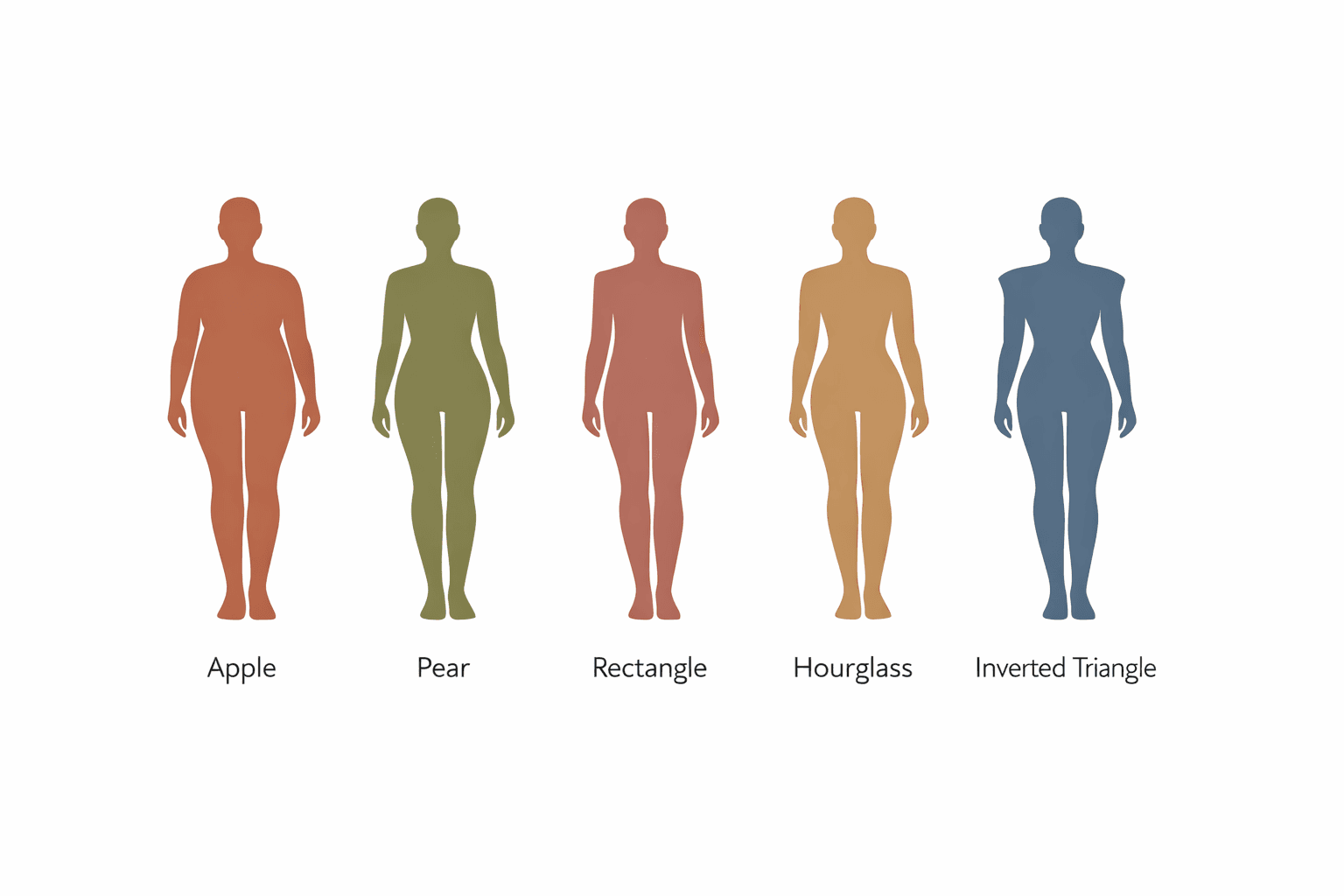
The 5 Primary Silhouettes — And How to Dress Each One
Apple Body Type
Definition: An apple silhouette carries more volume in the midsection relative to the shoulders and hips, with slimmer legs and arms.
Core styling principle: Elongate the torso, define the waist visually, and draw attention upward and downward away from the midsection.
- Empire-waist kurtas that skim the stomach
- A-line kurtis with vertical print panels
- Straight-leg trousers with a V-neck blouse
Pear Body Type
Definition: A pear silhouette has narrower shoulders and bust relative to wider hips and thighs.
Core styling principle: Balance the upper and lower body by adding visual width to the shoulders and minimising volume at the hips.
- Boat-neck or off-shoulder tops
- A-line skirts and palazzos
- Flared kurtis with slim-fit pants
Rectangle Body Type
Definition: A rectangle silhouette has similar shoulder, waist, and hip measurements with minimal curve differentiation.
Core styling principle: Create the illusion of a defined waist by adding curves with fabric, draping, and colour blocking.
- Peplum kurtis
- Wrap-style blouses with a defined waist tie
- Sarees with a padded or structured blouse
Hourglass Body Type
Definition: An hourglass silhouette has balanced shoulder and hip width with a significantly narrower waist.
Core styling principle: Celebrate the waist definition. The primary risk is clothing that obscures the waist rather than following it.
- Wrap dresses and wrap-style kurtis
- Sarees with a fitted, waist-defining blouse
- Belted kurtas over straight trousers
Inverted Triangle Body Type
Definition: An inverted-triangle silhouette has broader shoulders or upper-torso emphasis relative to the hips.
Core styling principle: Keep the shoulder line clean and use shape, texture or movement below the waist when you want a more balanced visual line.
- Clean V-neck kurtas with straight sleeves
- Wide-straight trousers with a simple top
- Sarees with restrained shoulder detail and a fluid lower drape
How Indian Clothing Categories Map to Body Geometry
One of the most underserved aspects of styling for Indian women is the intersection of silhouette principles with ethnic garment design. Here is a quick reference:
| Garment | Apple | Pear | Rectangle |
|---|---|---|---|
| Kurta length | Hip-length or longer, empire cut | Tunic length, A-line | Peplum or belted waist |
| Saree draping | Avoid tight pleating at the front; opt for side pleats | Classic Nivi drape; wide pleats | Seedha pallu; structured blouse with padded shoulders |
| Salwar style | Straight-cut, not churidar | Palazzo or flared | Cigarette pants or dhoti |
Why Silhouette Alone Is Not Enough: The Colour Layer
Silhouette analysis tells you which shapes to wear. Colour analysis tells you which shades to wear within those shapes. An outfit built on the right silhouette but in the wrong colour palette will still look off — the complexion will appear sallow, tired, or flat.
ICONIK's Chromatic Harmony Mapping™ compares undertone, depth and contrast to create a practical palette for Indian ethnic wear, western wear and occasion dressing. Facial Architecture Analysis™ adds guidance for necklines, eyewear, earrings and hairstyle direction.
All Body Type Styling Guides
Apple Body Shape Styling
Use shoulder direction, drape, hem placement, and vertical line without hiding the body.
Pear Body Shape Styling
Test neckline, top hem, waistband fit, and lower-body fall one variable at a time.
Rectangle Body Shape India
Waist definition and proportion guidance for rectangle frames.
Hourglass Body Type
How to preserve waist definition without overbuilding volume.
Plus Size Body Type Styling
Plus-size styling guidance centered on proportion and structure.
Heavy Arms Styling
Sleeve, shoulder, and fabric guidance for arm-conscious dressing.
How to Dress a Tummy
Silhouettes and garment structures that avoid midsection cling.
Short Torso Styling
How to adjust rise, waist placement, and vertical proportion.
How to Look Taller with Clothing
Vertical-line styling principles for petite and shorter frames.
Inverted Triangle Body Type
Shoulder-balancing guidance for wider upper-body proportions.
Petite Styling India
Scale, length, and vertical-line advice for petite Indian women.
Free body and proportion tools
Use these interactive diagnostics if you want to test your own measurements before reading the deeper guides.
Frequently Asked Questions
How do I identify my body type?
Compare the width of your shoulders, your waist, and your hips. The proportional relationship between these three zones determines your silhouette category. Iconik's Geometric Silhouette Profiling™ goes further — it accounts for soft tissue distribution and limb length to produce a more precise prescription than a standard body shape quiz.
Why doesn't standard Western body type advice work for Indian women?
Many popular body-shape guides use Western garment examples—dresses, jeans and blazers—and rarely address kurta length, saree drape, salwar shape or dupatta placement. ICONIK applies familiar proportion concepts to Indian and fusion garment categories without assuming that every person in a category needs the same solution.
What is Geometric Silhouette Profiling™?
Geometric Silhouette Profiling™ (GSP) is Iconik's proprietary body analysis method. It maps the proportional geometry of the human frame — shoulder width, bust span, waist-to-hip differential, and limb length — to five primary silhouette archetypes. Unlike traditional body shape quizzes, it accounts for both skeletal structure and soft tissue distribution.
Can my body type change over time?
Proportions and fit needs can change with weight, muscle, age, pregnancy, surgery and other life events. Re-measure and reassess when your existing recommendations stop matching the way garments sit; a category is only a working description, not a permanent identity.
Does the Blueprint cover both ethnic and western wear?
Yes. Every Iconik Style Blueprint includes outfit recommendations across all wardrobe categories relevant to your lifestyle — ethnic wear, western wear, fusion, and occasion dressing.
Want this done for you within 5 working days after the consultation?
Your personalised Iconik Style Blueprint — body analysis, colour palette, and 20 outfit formulas.
Get My Style Blueprint — ₹2,699Cite this guide:
Rana, Jasmine. "How to Dress for Your Body Type in India." ICONIK LLP. Updated 24 July 2026. https://www.iconik.pro/body-type-styling