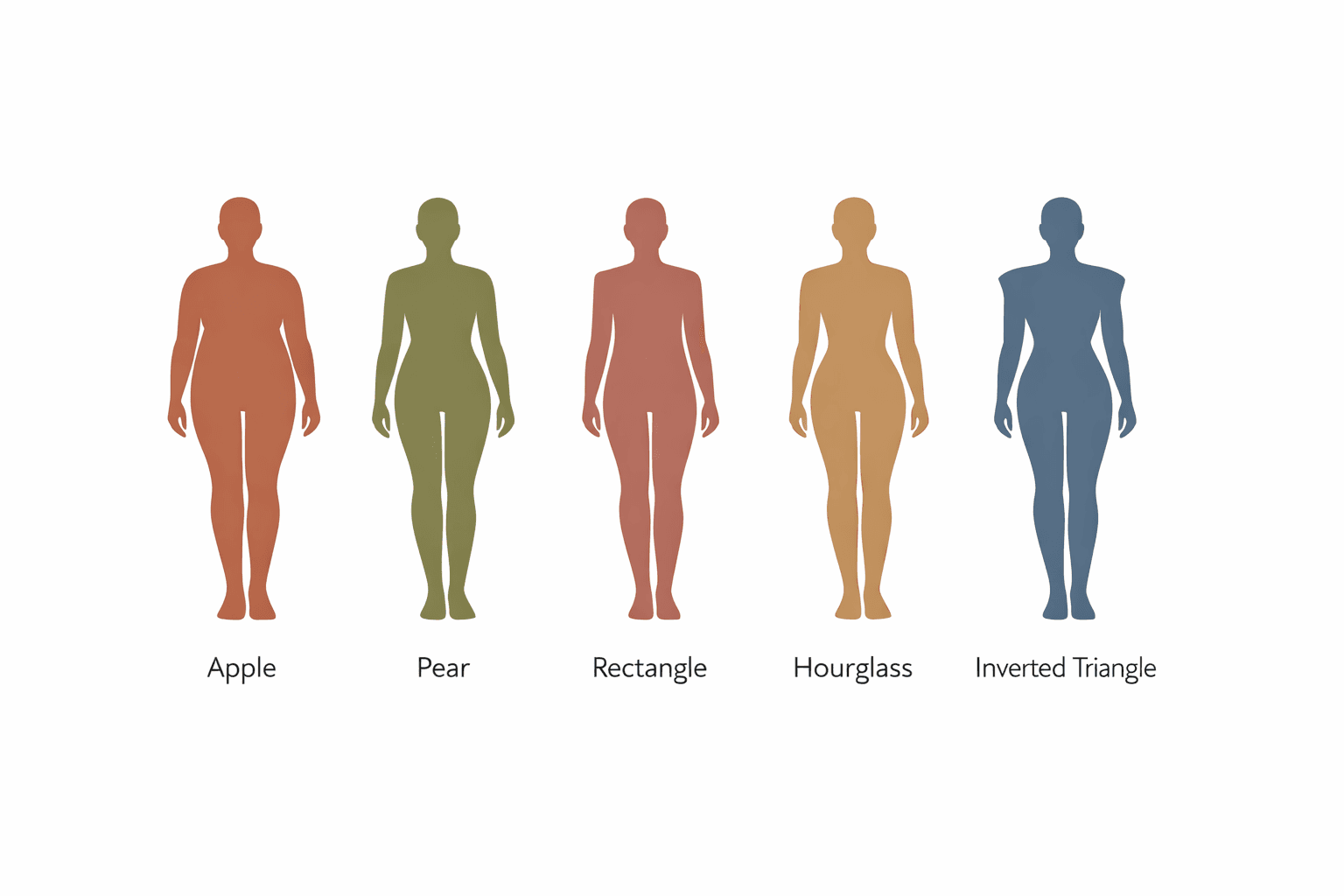
What Defines an Apple Body Shape?
An apple silhouette is a broad styling description for a body that carries more visible emphasis through the middle relative to the hip line, often with proportionally slimmer legs. Bust, shoulder width, torso length, and where the waist sits can still vary substantially.
ICONIK does not assign the category from one waist-to-hip threshold. The stylist compares shoulder, bust, waist, and hip relationships, torso length, limb proportion, photographs, and the way current garments fit.
The label is not a diagnosis and does not explain why the body has this distribution. Use it only when it helps you test garment shape, drape, and hem placement; discard any rule that conflicts with comfort or preference.
How Is Apple Body Shape Identified in Indian Women?
A single measurement can miss the relationship between shoulder line, bust, waist, hip, and torso length. Many people also sit between broad shape descriptions—for example, with midsection emphasis and a narrower shoulder line.
GSP™ records a primary and secondary pattern when that is useful, then translates the observation into options rather than forcing a binary category. Read the canonical methodology page for the framework's scope and limitations.
What Is the Best Indian Ethnic Wear for an Apple Body Shape?
Anarkali suits can work when the yoke sits comfortably and the flare begins from a deliberate point rather than adding tight gathering at the stomach. For work, test a restrained flare in breathable fabric and a length that suits your dress code.
Straight-cut kurtas at hip length worn over cigarette trousers or straight-leg salwars create a clean vertical line from shoulder to hem. The kurta must end at or just below the hip — not at the midsection.
- Anarkali suits with fitted yoke and full flare
- Straight-cut hip-length kurtas over straight trousers
- Palazzo sets in solid colours
- Floor-length kaftans (casual occasions)
- Sarees with side-pleat draping and structured blouse
Test carefully: short kurtis ending at the fullest point, tight horizontal embellishment at the waist, cropped layers that stop where you do not want emphasis, and bulky front pleating. These are adjustment prompts, not prohibited garments.
What Is the Best Western Wear for an Apple Body Shape?
Wide-leg trousers with a structured blazer worn open creates a strong vertical line. The blazer lapels frame the chest and draw attention upward. Wrap blouses that cross under the bust (empire-waist-adjacent cut) create a visual waist above the midsection.
- Straight or wide-leg trousers with a structured open blazer
- Wrap blouses crossing under the bust
- V-neck and boat-neck tops (upward focal points)
- A-line midi skirts with a structured fitted top
- Shift dresses in structured fabric (not jersey)
Test carefully: cropped jackets that stop at the fullest point, very tight tucks, rigid waistbands, and high-contrast horizontal breaks. Any of these can still work when the fit, fabric, and rest of the outfit create enough direction.
How Should an Apple Body Shape Wear a Saree?
A tightly packed Nivi pleat can add fabric at the front waist. If that placement feels bulky, reduce the number or thickness of pleats, shift them slightly, or choose a more fluid saree. There is no need to abandon the Nivi drape.
Better draping options: Side-pleat style (pleats to the side rather than straight front). Box-pleat Gujarati drape. Seedha pallu with minimal front pleating. The goal is to reduce the volume of fabric sitting at the front of the waist.
Blouse: Boat neck or sweetheart neck in structured fabric (crepe, dupion). Slightly padded shoulders to balance the width upward. Full-length or 3/4 sleeve. A structured, fitted blouse with shoulder definition is the most flattering frame for an apple silhouette in a saree.
What Colours and Prints Work for an Apple Body Shape?
Use colour to create hierarchy rather than assuming the midsection must be dark. Tonal dressing can extend the line; a brighter neckline can draw the eye upward; and a deliberate lower-body colour can distribute emphasis across the outfit.
Test carefully: large horizontal motifs at the waist, high-shine fabric across a tight area, or a sharp contrast line at the fullest point. If you enjoy them, adjust scale, placement, or the surrounding silhouette instead of treating them as forbidden.