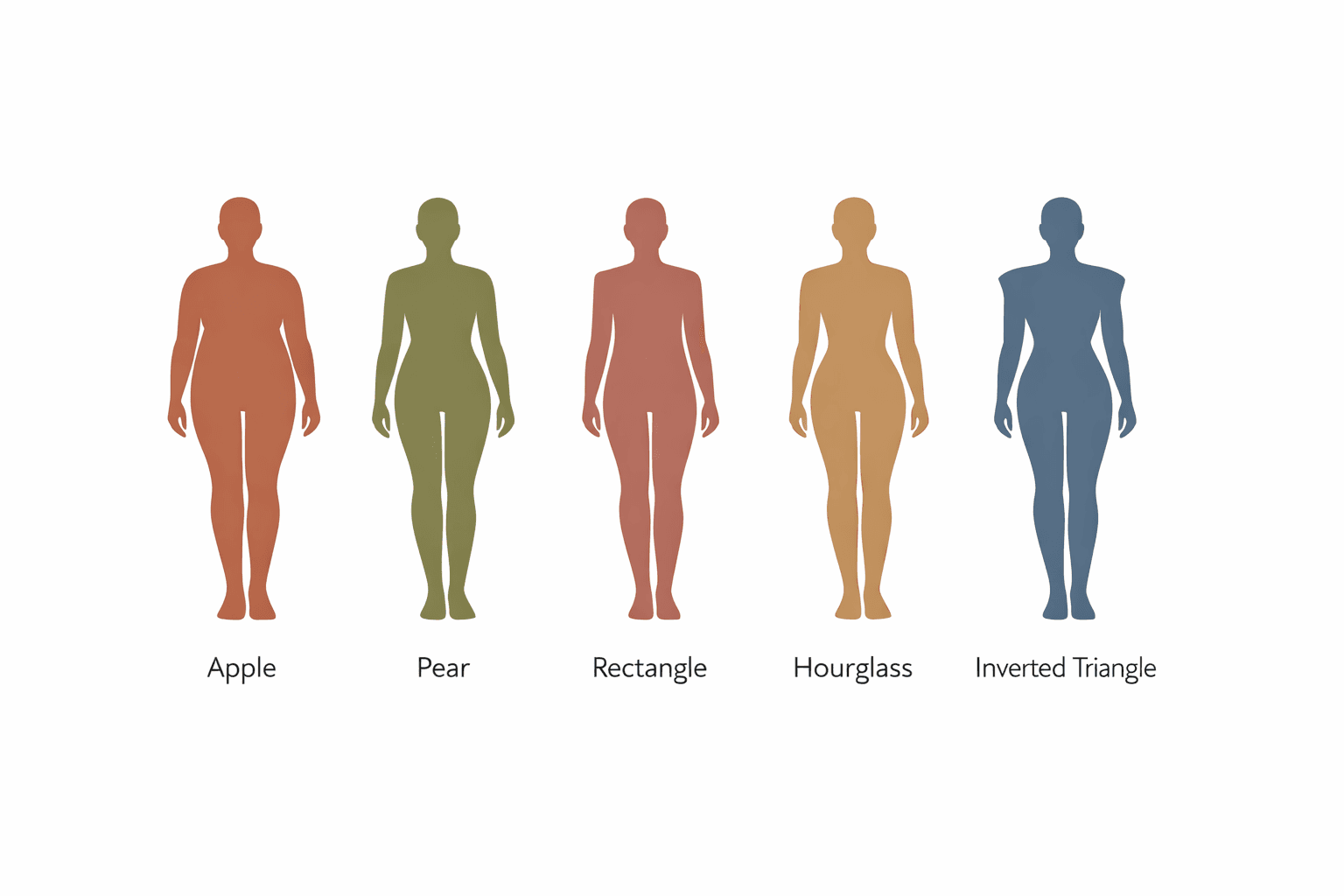
What a pear body-shape label actually tells you
The label usually means the hip line appears wider than the shoulder line, often with a visible waist. It does not predict height, clothing size, bust, tummy, thigh shape or how you prefer clothes to fit.
Do not diagnose the category from one circumference or assume that it is unusually common in one ethnicity. Compare the whole outfit from the front and side, and pay attention to where garments pull, collapse or stop.
If you want visual balance, you can add direction near the shoulder, simplify the hip area or continue the lower-body line. If you want to emphasise the hip, use fit, colour or detail there. Both are valid styling outcomes.
Kurtas, salwar suits and Anarkalis
Choose the top hem deliberately
A hem that stops exactly at the fullest hip can create a strong horizontal marker. If you prefer continuity, test a slightly shorter hem or one that falls clearly below that point. Pair the length with the bottom width before judging it.
Control ease through the hip
A straight kurta needs enough room to fall without pulling or riding up. An A-line kurta can follow the shoulder and release through the hip. Neither shape is automatically better; the side seam and fabric weight decide whether it hangs cleanly.
Use the dupatta as a directional layer
A dupatta across both shoulders creates horizontal presence; a long one-sided drape creates vertical direction. Choose the effect that supports the outfit rather than using one drape for every pear-shaped body.
Saree and blouse choices
- Blouse neckline: boat, square, V and soft round necklines can all work; evaluate neckline-to-shoulder scale and comfort.
- Sleeve: use sleeve shape to create or reduce shoulder presence, but do not sacrifice arm movement.
- Pleats: distribute them evenly and choose fabric that does not create unwanted stiffness at the hip.
- Pallu: a wider open pallu adds upper-body presence; a narrow vertical pallu creates length.
- Border: judge border width in relation to your height, drape and blouse—not body-shape label alone.
See the saree draping guide for complete fabric and pleat considerations.
Trousers, jeans, skirts and dresses
Start at the waistband. It should sit without digging, gaping or creating folds that the garment was not designed to make. Then compare the leg line:
- Straight leg: gives a clean fall when it has enough room through the hip and thigh.
- Wide leg or palazzo: continues width into a long line; avoid excessive front gathers if they feel bulky.
- Bootcut or flare: repeats some width near the hem and can distribute lower-body emphasis.
- Tapered leg: highlights the difference between hip and ankle; wear it when that is the effect you want.
- A-line skirt: works when the waistband fits and the fabric releases instead of clinging.
Fitted dresses are not off-limits. Check seam placement, stretch recovery and whether the garment follows the body without twisting or pulling.
The pear-shape fitting-room check
- Does the shoulder seam sit correctly?
- Can you sit and walk without the garment riding up?
- Does the top hem stop intentionally rather than at an accidental widest point?
- Does the waistband lie flat from front and side?
- Does the lower fabric fall, cling or gather—and is that the effect you want?
- Does the whole outfit have one clear focal point?
Photograph the full outfit from a consistent distance. Fit and line are easier to judge than when looking down at yourself in a fitting-room mirror.