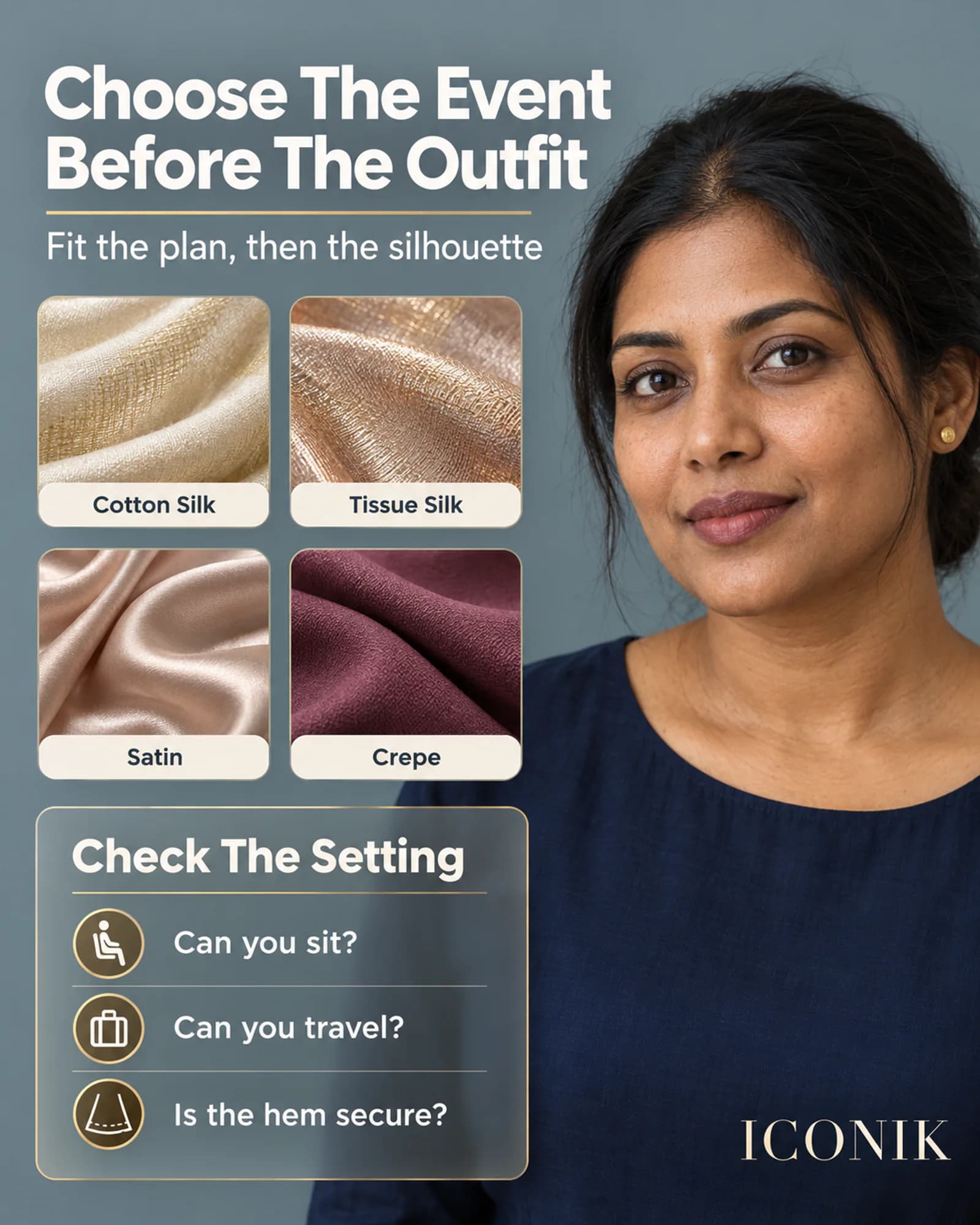
What are you dressing for on Diwali?
Diwali outfit by body type is a useful search, but the occasion is the first decision. You may be hosting a puja, visiting relatives in the afternoon, travelling between homes, or going straight from work to dinner. Choose an outfit that lets you do those things. Ask your host about any family or religious dress expectations; they vary, and there is no single colour or garment rule for every celebration.
| Plan | Easy starting outfit | Check before leaving |
|---|---|---|
| Home puja | Mustard silk kurta, trousers and tissue dupatta | Sit on the floor; keep loose hems clear of lamps |
| Visits across town | Rust block-print kurta and white palazzos | Walk, climb stairs and sit in a car |
| Evening dinner | Sea-green kurta and sharara or a pre-draped satin saree | Try the full outfit after dinner, including footwear |
| Office party | Red tailored suit or blue waistcoat and cream trousers | Match the invitation and your workplace |
If you need one outfit for several stops, begin with a comfortable base and change one element: jewellery, dupatta, jacket or footwear. The mustard silk kurta set below uses a tissue dupatta for shine while keeping the base easy to move in.
How can body shape guide a Diwali outfit without restricting it?
Look at shoulder, waist and hip relationships in a full-length photograph of an outfit you already like. The aim is to decide where you want visual weight and where you want a clean fall. A shape label cannot tell you your height, preferred fit, mobility needs or how a particular fabric behaves. ICONIK uses Geometric Silhouette Profiling™ as a styling framework for these choices; the methodology guide explains its scope and limits.
- Fuller through the middle: test a smooth front panel, a softly shaped kurta or a saree with flat pleats. Put detail at the neckline or pallu if you enjoy that direction.
- Hips wider than shoulders: a worked blouse, textured dupatta or shoulder detail can bring the eye upward. Keep the skirt as full or quiet as you prefer.
- Straighter waist: use a seam, belt, blouse hem or contrast to mark a waist if you want one. A straight unbroken column is equally valid.
- Waist more defined: decide whether to show that line with a fitted blouse or let a relaxed garment fall past it. Fit at the bust and hip still matters.
- Shoulders wider than hips: embroidery or volume lower down can balance the frame if that is your goal. A strong shoulder can also be the lead feature.
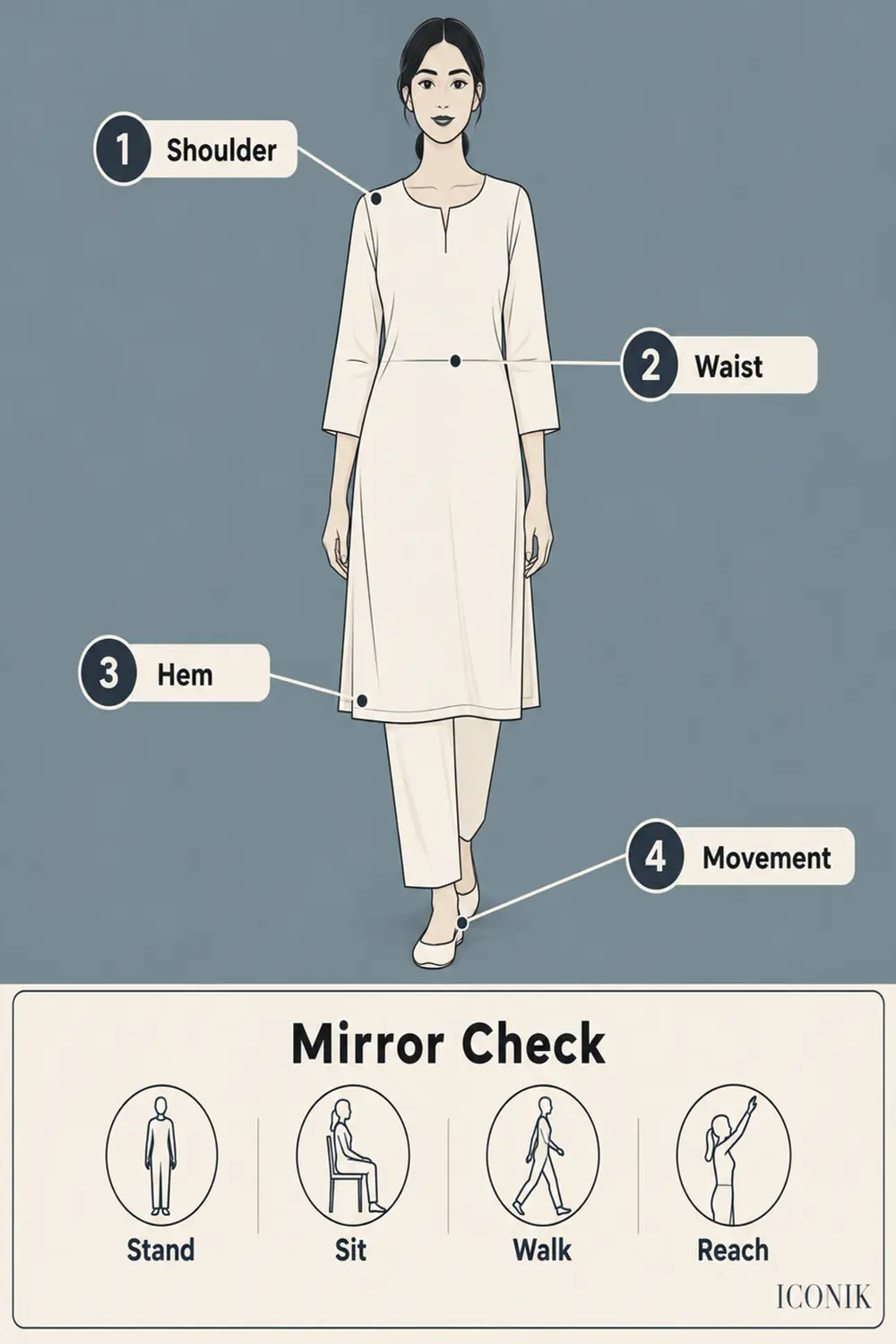
Which saree, kurta, lehenga and salwar formulas are worth trying?
Begin with the garment you can wear for the whole event. Then change one variable at a time: blouse fit, waist placement, skirt flare or dupatta route. These formulas give you a testable starting point rather than a fixed “best outfit” for a body type.
Saree: blouse fit + pleat volume + pallu direction
A blouse should let you raise your arms and sit without pulling. Pin the saree at the height you will actually wear it; moving the waistband later changes the whole line. Flatten front pleats if you want a cleaner centre, or let them hold more volume if you like that shape. Compare a narrow pallu, a diagonal fall and an open shoulder drape in the same mirror and light. For more detail, use the saree draping guide.
Kurta or salwar: shoulder + hem + bottom width
The rust block-print straight kurta below uses white palazzos, while the mustard silk kurta uses matching straight trousers and a tissue dupatta. Compare the two outlines: the first gives width below the kurta hem; the second reads as a tonal column. The sea-green kurta and sharara set adds still more movement at the leg. Check how the kurta hem meets each bottom and let the dupatta be the focal point when it carries the most shine. The salwar kameez guide explores the garment relationships.
Lehenga or anarkali: waistband + flare + movement
On a lehenga, check the waistband while standing and sitting, and make sure the skirt clears your shoes and any lamps nearby. For an anarkali, look at where the flare begins and whether the hem lets you climb stairs. Neither garment belongs to one shape. If you already own one, take a full-length photograph and assess its shoulder, waist and hem before replacing it.
Photograph the options at the same distance rather than judging separate product pictures. The library-backed formulas below show how the top, bottom, layer, shoes and accessories work together. When a library look has no bag or jewellery specified, keep that element unassigned rather than inventing a matching piece.
Which complete outfit formulas can you use this Diwali?
These are selected from ICONIK's curated outfit library. They are starting combinations, subject to the fit, comfort and dress expectations of your event.
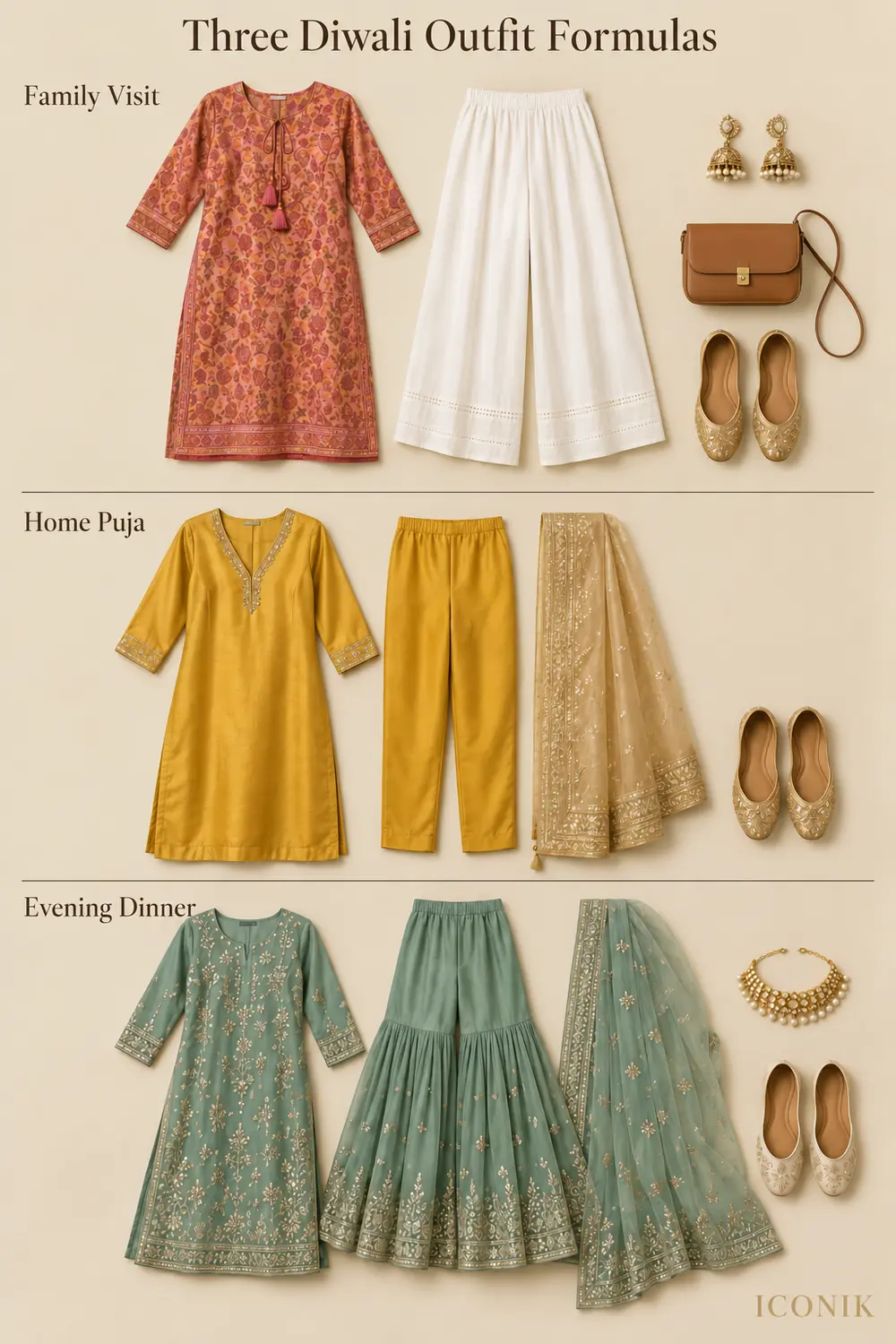
- For a relaxed visit: a rust-and-pink block-print straight kurta over white palazzos, with no layer, gold flat juttis, a tan mini crossbody and jhumkas. The tassel ties lead the eye to the neckline while the plain bottom lets the print stand out.
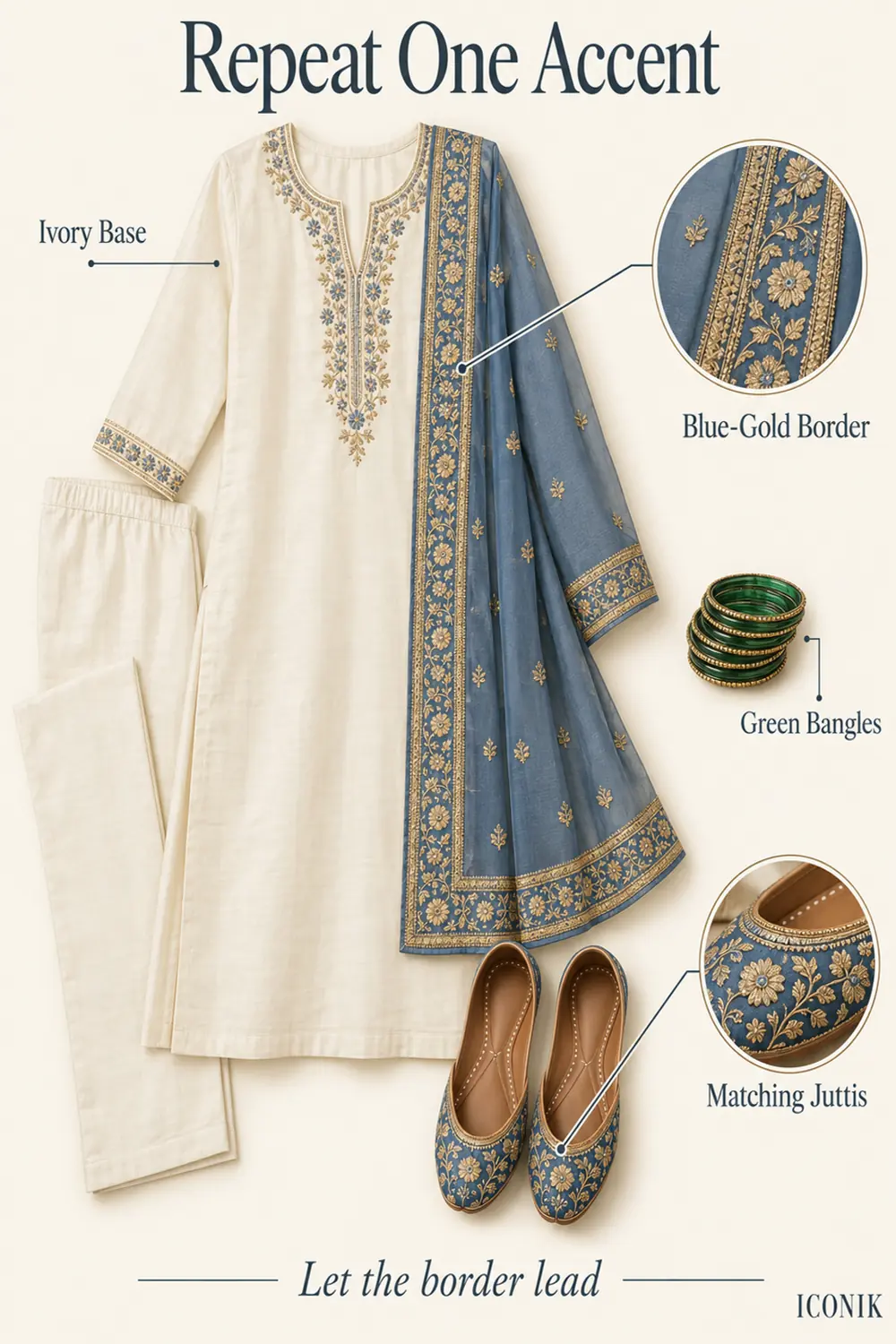
- For a home puja: an ivory embroidered kurta and ivory straight trousers, with a blue-and-gold bordered dupatta over one shoulder, matching embellished juttis and green glass bangles. The dupatta border repeats in the shoes, so the contrast feels considered.
- For a dressier family gathering: a mustard silk straight kurta and matching trousers, a gold tissue dupatta with zari border over one shoulder, gold flat juttis and minimal accessories. The tissue is the single shiny layer; check its fall near lamps.
- For an evening dinner: a sea-green embroidered kurta with matching sharara trousers, a net dupatta pinned at one shoulder, cream juttis and a gold choker. The full tonal set keeps the flare deliberate, while the pinned dupatta stays in place.
- For a party with movement: a royal-blue embellished sleeveless kurta and matching straight trousers, a blue net dupatta over one shoulder, silver heeled sandals and an embellished potli. The scalloped neckline repeats at the hem; test the heel and dupatta together before leaving.
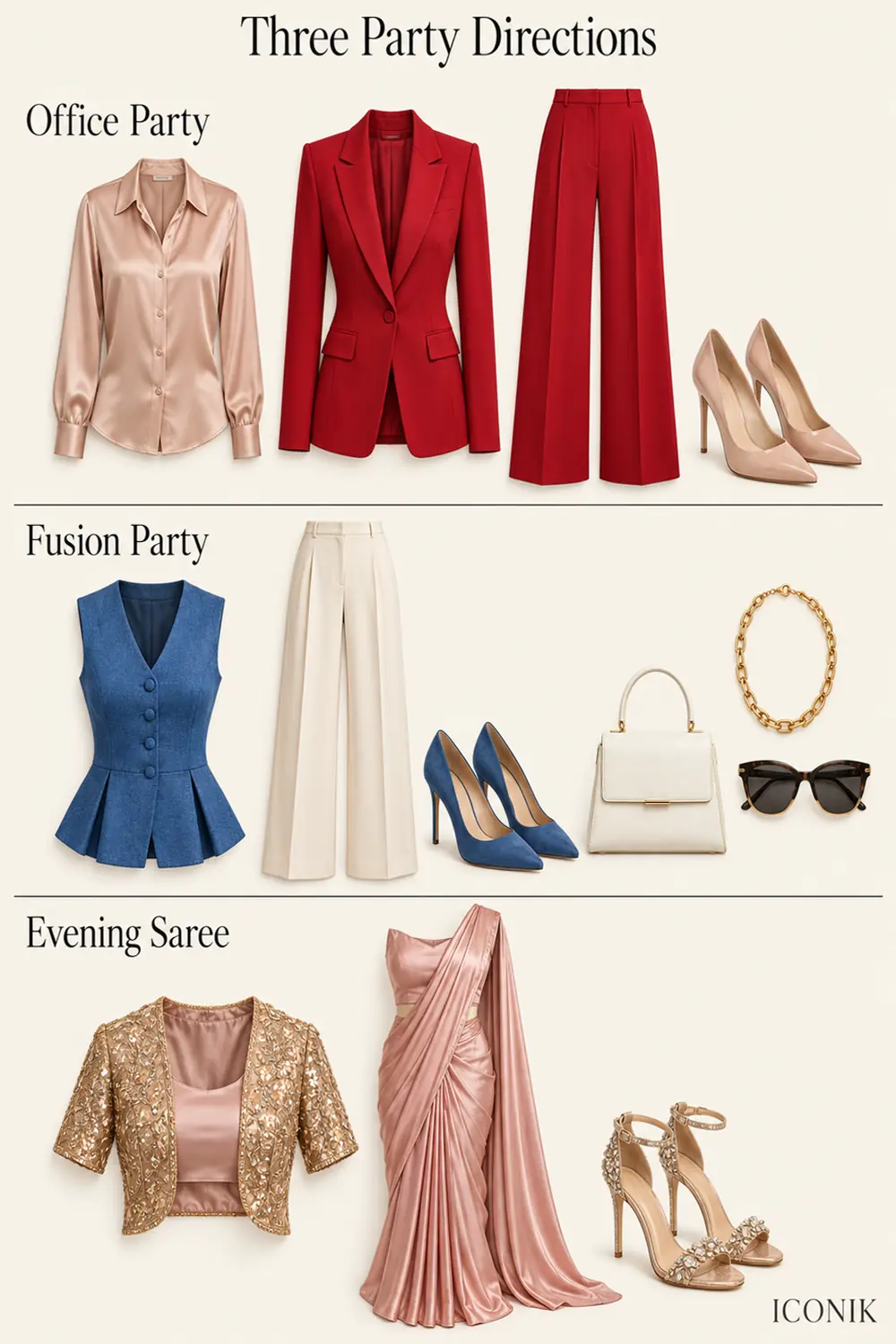
- For a saree option: a blush-pink pre-draped satin saree with a gold sequinned short-sleeve jacket over the blouse, embellished heels and no bag specified. The cropped worked layer adds texture above a fluid drape; check that the pallu stays secure when seated.
- For a corporate Diwali party: a nude-blush satin blouse, red tailored blazer and matching wide-leg trousers, nude pumps and no bag specified. The suit reads as one continuous red column; the blouse softens the contrast near the face.
- For a quieter fusion look: a blue sleeveless peplum waistcoat worn as the top, cream wide-leg trousers, no layer, blue pointed pumps, a white top-handle bag, gold necklace and sunglasses. Matching the shoes to the top ties the two halves together.
The saree and sharara options offer more drape and movement; the kurta sets are easier to repeat across visits. The western looks suit a party whose dress code welcomes them. None is assigned to one body shape: use the garment checkpoints above to adjust fit and visual balance by preference.
Which fabrics work for your climate and the length of the celebration?
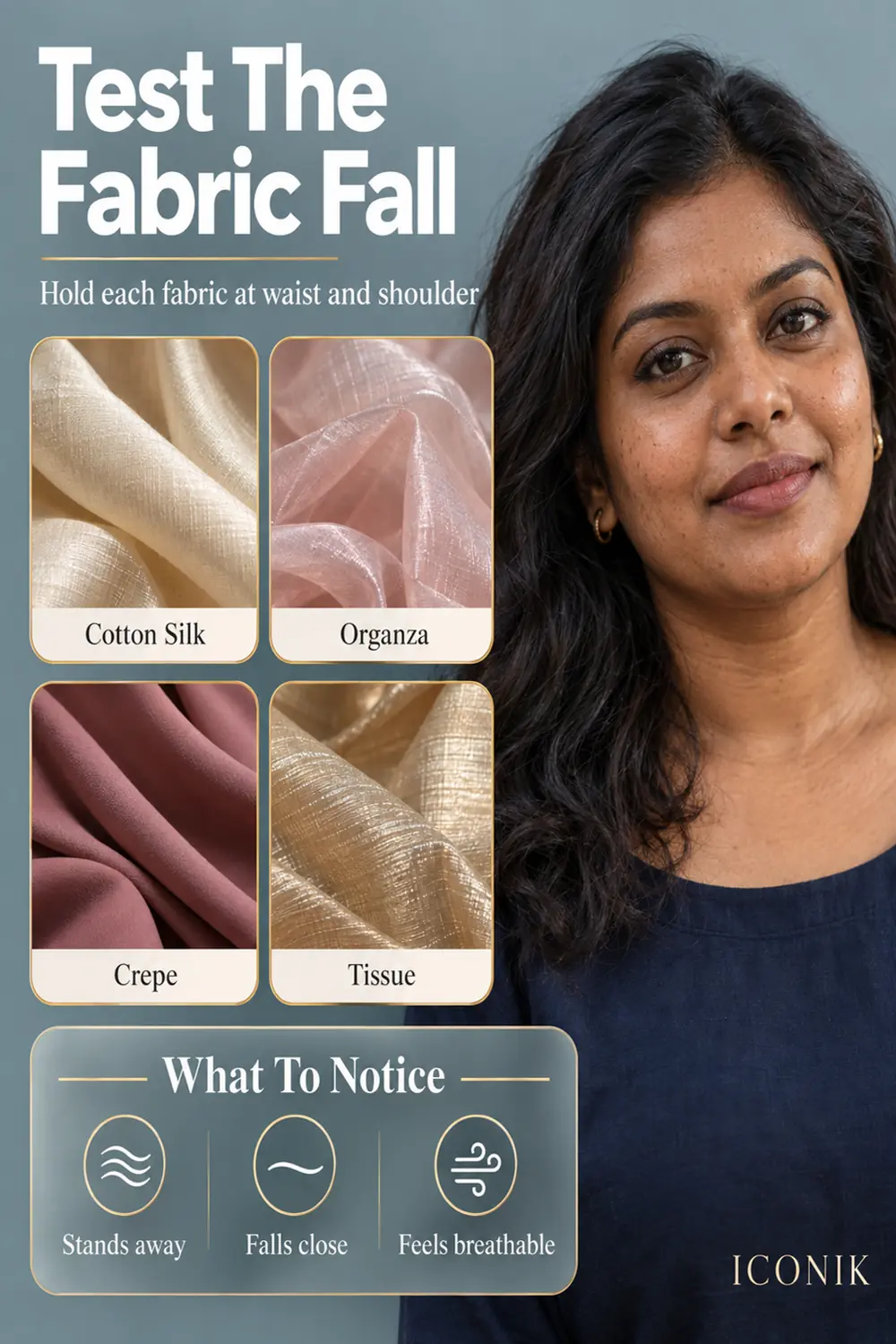
Fabric changes the silhouette as much as a cut does. Crisp organza stands away from the body; soft cotton silk and drapey crepe fall closer. A heavily gathered skirt adds more volume than a smooth A-line skirt in the same colour. Hold a fabric at the waist and shoulder before you buy it so you can see whether it makes the line you want.
In a warm or humid city, look for breathable linings, manageable layers and sleeves you can move in. In a cooler evening, add a shawl, light jacket or heavier fabric without sacrificing movement. Air-conditioned offices and crowded homes may feel different from the weather outside. Try your outfit in the setting you expect, not just under a fitting room light.
For a puja, check that the hem and dupatta stay away from diyas and that you can sit and stand easily. For travel, test the outfit in a chair and with your bag. Beadwork and net can catch on jewellery or seating; run a hand over the surface and inspect the lining.
How do colour, jewellery and western wear fit the look?
Choose a colour you enjoy near your face, then test it in daylight and evening light. Skin depth alone does not assign a palette. If you use Chromatic Harmony Mapping™, treat it as a styling framework and read the colour methodology rather than treating any shade as forbidden. Our undertone guide shows how to compare fabric drapes at home.
The library's red trouser suit uses a nude-blush blouse beneath a tailored blazer; its matching wide-leg trousers carry the red line down to the nude pumps. Another library look buttons a blue peplum waistcoat as the top, pairs it with cream wide-leg trousers, and repeats the blue in pointed pumps. These are options for a party or office event whose dress code welcomes western wear. Follow your host's expectations when a puja is part of the event.
How can you shop and check the outfit without overspending?
Start with your wardrobe. A changed blouse fit, fresh lining, adjusted kurta hem or different dupatta may do more than a new outfit. If you buy one piece, choose the gap you cannot solve at home. Browse broad marketplaces such as Myntra, Ajio or Nykaa Fashion for cut and fabric ideas, then compare them with local shops or a tailor who can adjust shoulder, sleeve and hem. Check return and alteration terms before ordering.
Give the outfit a budget before opening a shopping app. Divide it into garment, alteration, footwear and accessories; an inexpensive garment with poor fit may need more work than a slightly dearer one that fits the shoulder. If the budget is tight, reuse the most expensive piece you own and change only the piece near the face or the garment that is uncomfortable. Ask a local tailor for an alteration quote before replacing a saree blouse or kurta. When shopping online, filter first by fabric and care instructions, then inspect garment measurements rather than relying on a size label. A festive look is easier to repeat when each piece also works separately.
- Photograph the complete outfit from the front and side, with the intended shoes.
- Sit, reach, walk, climb stairs and carry the bag you will use.
- Check the waistband, blouse armhole, skirt hem and dupatta security.
- Keep one main visual direction and change only one item if the look feels busy.
If you want help locating your proportions, try the free silhouette scan. It is a styling starting point, not a diagnosis. For broader body-shape guidance, visit the body type styling hub.