Formula 1
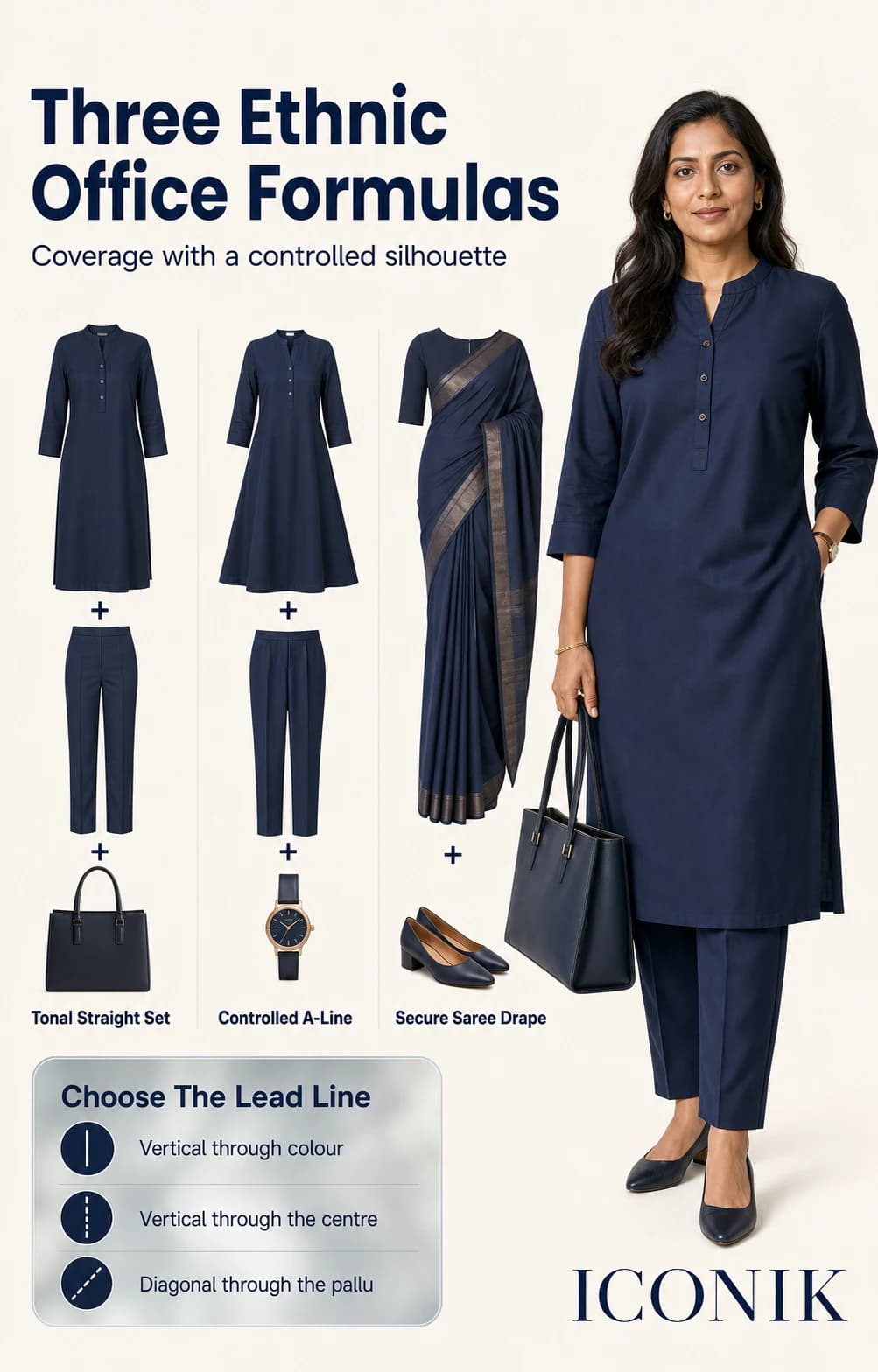
Tonal straight kurta set
Straight kurta + tonal straight trousers + structured tote
A continuous colour line looks controlled, while the straight cut provides coverage without excess fabric.
Modest professional dressing works best when coverage comes from garment design rather than simply adding size. Clean shoulders, breathable opaque fabric, deliberate sleeve and hem lengths, and one controlled silhouette create polish across Indian ethnic and western office wardrobes.
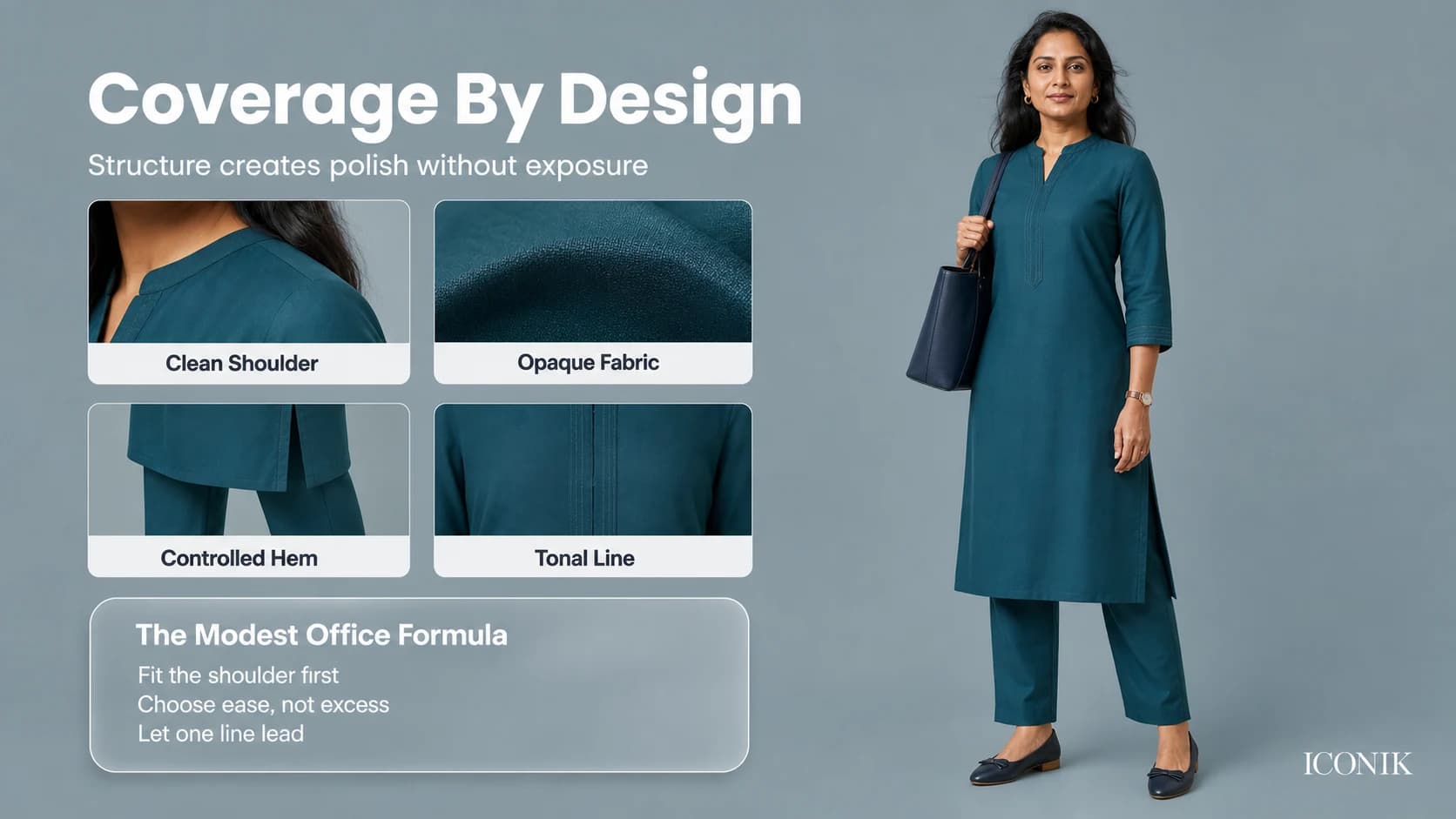
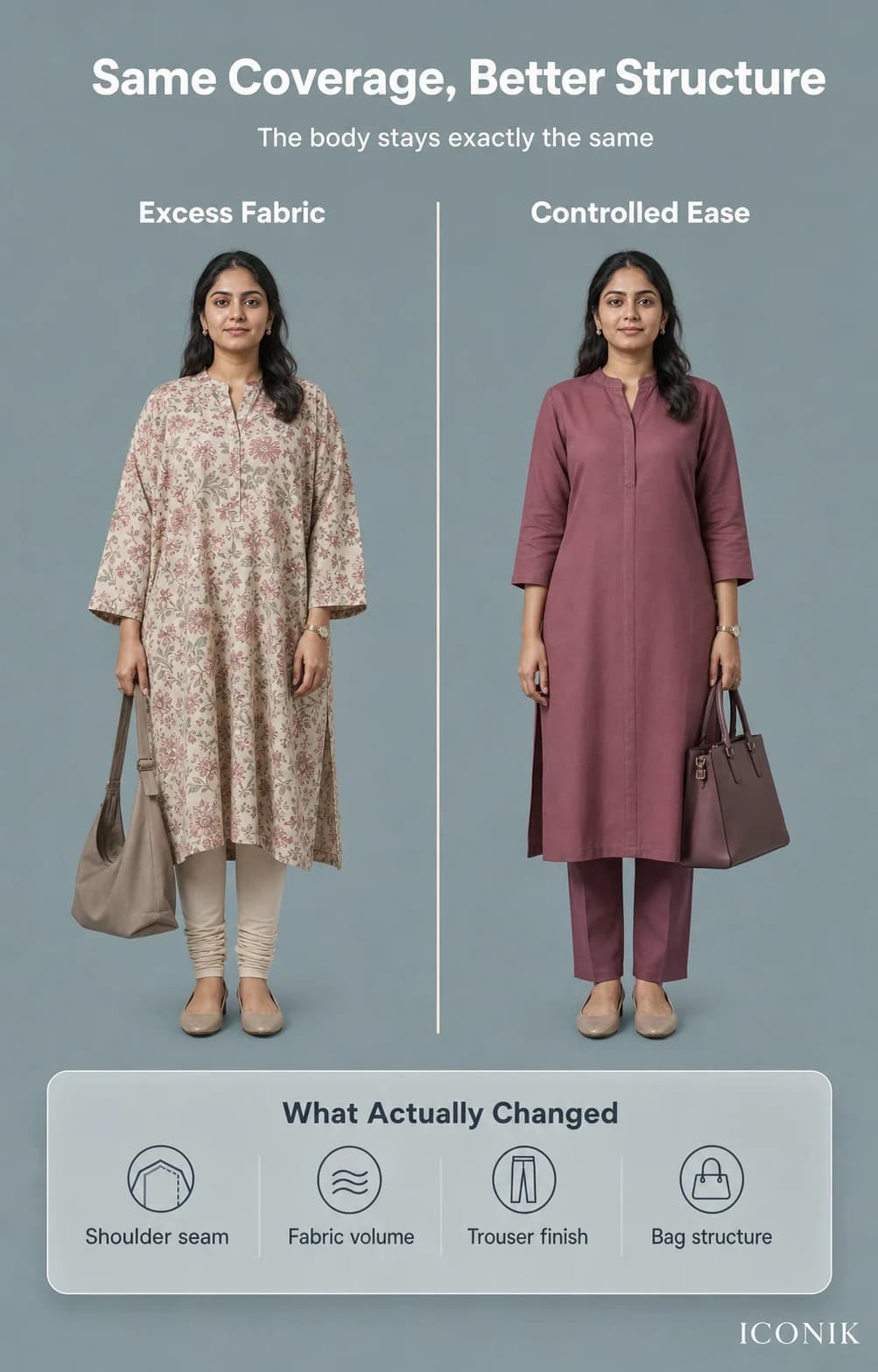
Modest dressing does not become frumpy because it covers the body. It loses clarity when several variables become uncontrolled at once: a dropped shoulder, excess fabric through the torso, an unfinished trouser line, a soft bag, a busy print and a dupatta that spreads horizontally across the outfit.
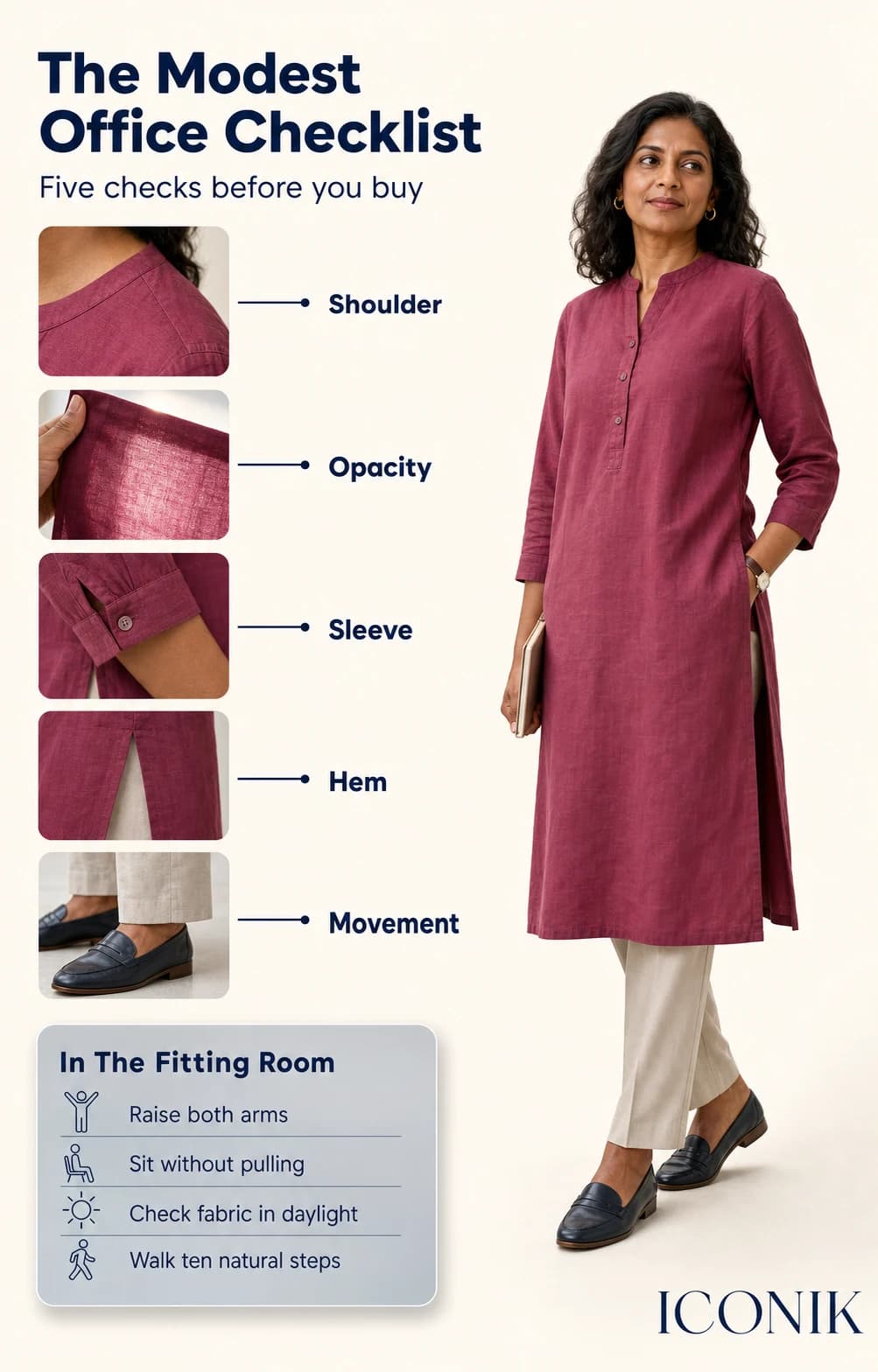
The solution is coverage through design. Fit the shoulder first, then choose enough ease to sit and move without pulling. Use an opaque fabric, an intentional sleeve length and a finished hem. The garment can be relaxed without becoming shapeless.
Run a movement test before judging the mirror: raise both arms, sit, reach forward and walk ten steps. A modest office outfit must function for the workday, not only look composed while standing still.
Choose the formula that fits your office, commute, climate and coverage preference. Each one has a clear lead line and can be made more formal through fabric, colour and accessories.
Formula 1
Straight kurta + tonal straight trousers + structured tote
A continuous colour line looks controlled, while the straight cut provides coverage without excess fabric.
Formula 2
Low-flare A-line kurta + narrow or straight trousers + watch
A small amount of flare creates movement without turning the outfit festive or visually wide.
Formula 3
Mid-thigh kurta + high-rise wide-straight trousers + closed shoes
The shorter top reveals the trouser line while the rise and full length maintain coverage.
Formula 4
Opaque saree + practical blouse + pinned pallu + closed-toe shoes
A secure diagonal pallu and clean blouse shoulder make the saree workable for meetings and movement.
Formula 5
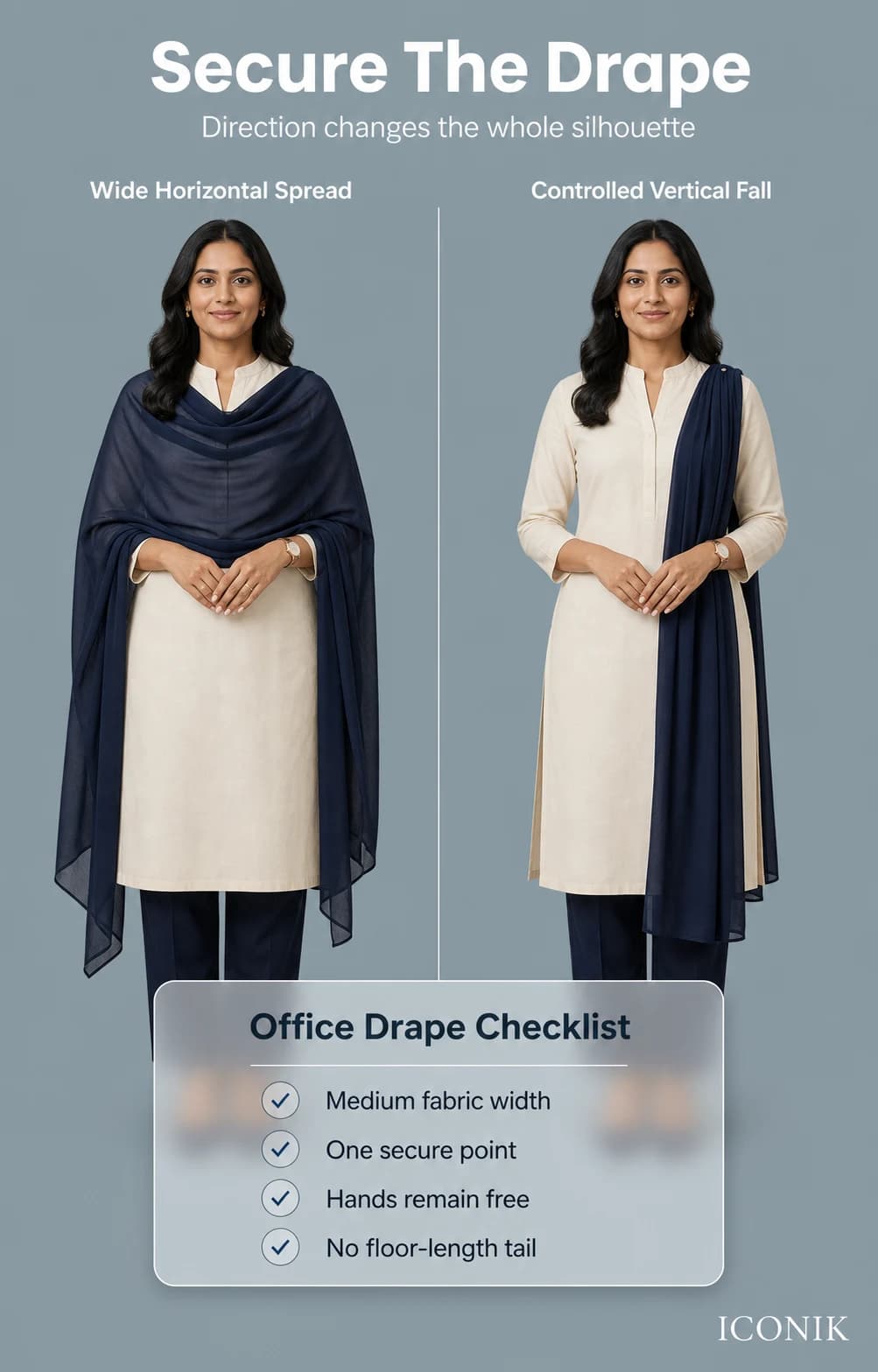
Solid kurta set + medium-width dupatta + one secure shoulder point
The dupatta becomes one vertical or diagonal line instead of a layer that needs constant adjustment.
Formula 6
Tonal inner column + open long jacket + straight trousers
The open centre creates a vertical frame; keep the jacket fabric light enough for the climate.
Formula 7
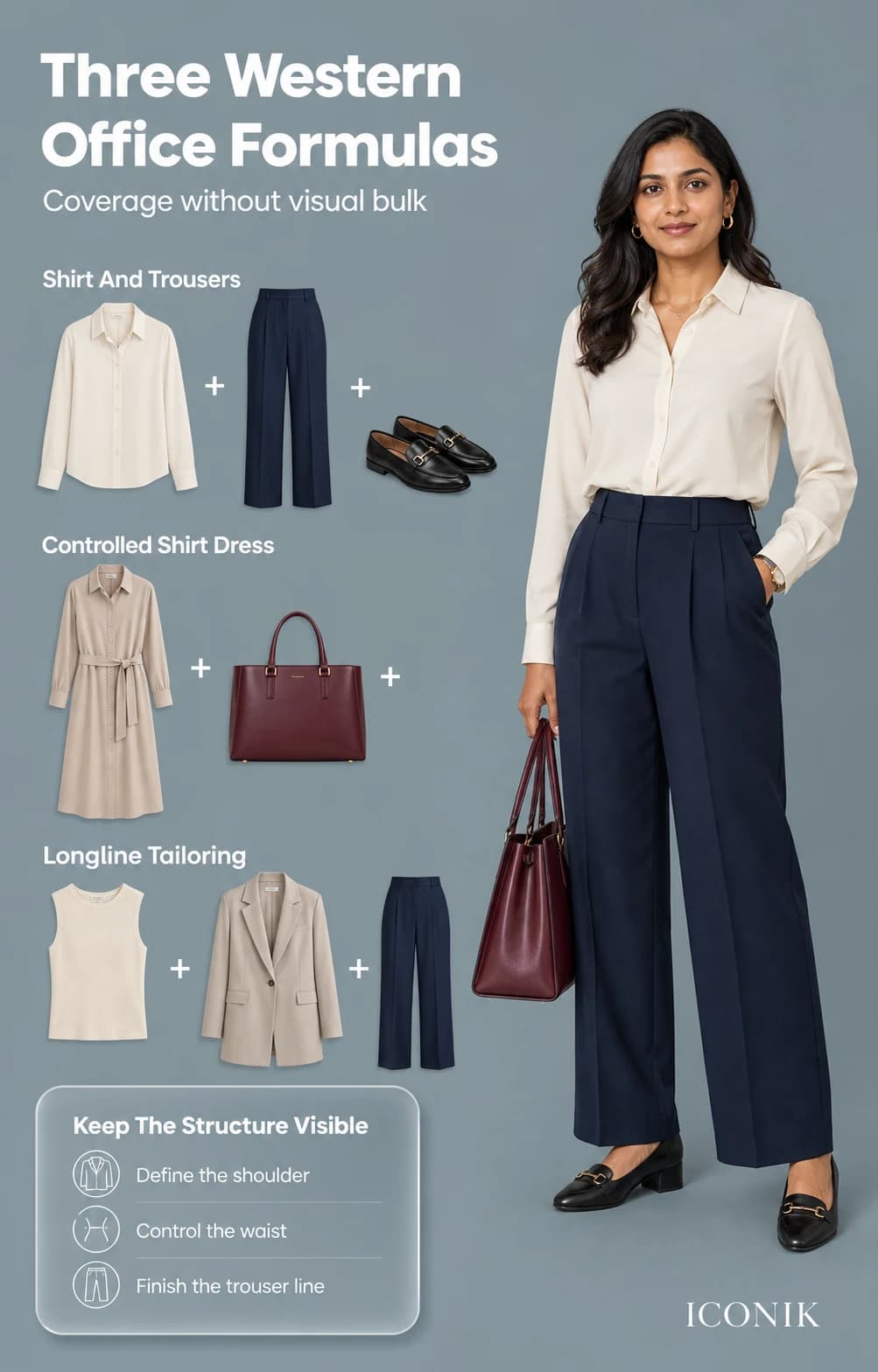
Opaque collared shirt + high-rise straight trousers + loafers
A defined shoulder and finished trouser break create polish without relying on a tight fit.
Formula 8
Full or three-quarter sleeve blouse + wide-straight trousers + structured bag
The trouser falls vertically from the hip while the blouse keeps the upper body visually precise.
Formula 9
Midi shirt dress + adjustable waist + closed shoe
Buttons and a collar provide structure; the waist should skim rather than grip.
Formula 10
High-neck shell + longline blazer + matching trousers
A single tailored outer line creates coverage and formality; remove the blazer when the climate requires it.
Formula 11
Fine-gauge knit + midi skirt + low boot or loafer
Fine fabric reduces bulk while the uninterrupted column keeps the outfit visually calm.
Formula 12
Opaque base top + structured overshirt + full-length trousers
The open overshirt adds coverage and a vertical frame without the heat or stiffness of a blazer.
A covered outfit contains more uninterrupted fabric, so colour can occupy a larger visual area. Use one dominant colour, one supporting neutral and one controlled accent. This creates hierarchy without requiring the outfit to become dark or monochromatic.
Tonal dressing—related shades rather than one exact colour—can create a long visual line while preserving depth. For example, deep teal with soft navy, berry with cocoa, or warm ivory with camel. If you use print, let either the print or the accessory lead, not both.
Decide what the dupatta must do: provide neckline coverage, add a vertical line, or complete the colour palette. Fold it to a controlled width, secure one point when you need free hands, and keep the tail clear of the floor and chair wheels.
Fibre names are only a starting point. Cotton can be heavy; viscose can be breathable or clingy; linen blends can be cool but transparent. Test the actual fabric for opacity, airflow, recovery and movement.
Hold the fabric against daylight and check seams as well as the centre panel.
Wear it for ten minutes; check the back, underarm and elbow rather than touching it briefly.
Sit for five minutes and see whether the fabric crushes, bags or clings.
Raise your arms and reach forward; the hem should not rise beyond your comfort level.
Yes. Authority comes from deliberate construction: a clean shoulder, controlled ease, opaque fabric, a finished trouser or hem line, and accessories that support one visual hierarchy. Coverage and polish are compatible; the garment should allow movement without losing its structure.
A reliable formal formula is a solid or low-contrast straight kurta with tonal straight trousers, a controlled dupatta or no dupatta, closed-toe shoes and one structured bag. A securely draped saree with an opaque blouse can be equally formal. Choose according to your workplace and movement needs.
Choose a loose-woven but opaque cotton, linen blend or lightweight viscose; allow ease through the armhole and upper arm; and use a three-quarter sleeve when your coverage preference allows it. Fibre labels do not guarantee comfort, so test opacity, airflow and movement in the actual garment.
Fold the dupatta to a controlled width, create one clear vertical or diagonal line, and secure one point at the shoulder or neckline when your work requires free hands. Keep the tail above the floor and test sitting, walking and reaching before leaving home.
Free silhouette diagnostic
The Silhouette Scan uses four simple measurements to identify where your outfit needs structure, ease, and visual balance.
Take the Free Silhouette Scan →Cite this guide:
Rana, Jasmine. "Modest Office Wear for Indian Women: 12 Polished Formulas." Iconik, updated 23 July 2026. https://www.iconik.pro/style-guides/modest-professional-fashion-india