How to Dress for a Job Interview in India
What you wear to an interview is your first professional communication. In India, interview dress codes vary significantly by industry and company culture — what works for a banking interview in Mumbai may be inappropriate for a Bangalore startup. This guide covers every major interview context with specific outfit guidance for Indian and Western wear.
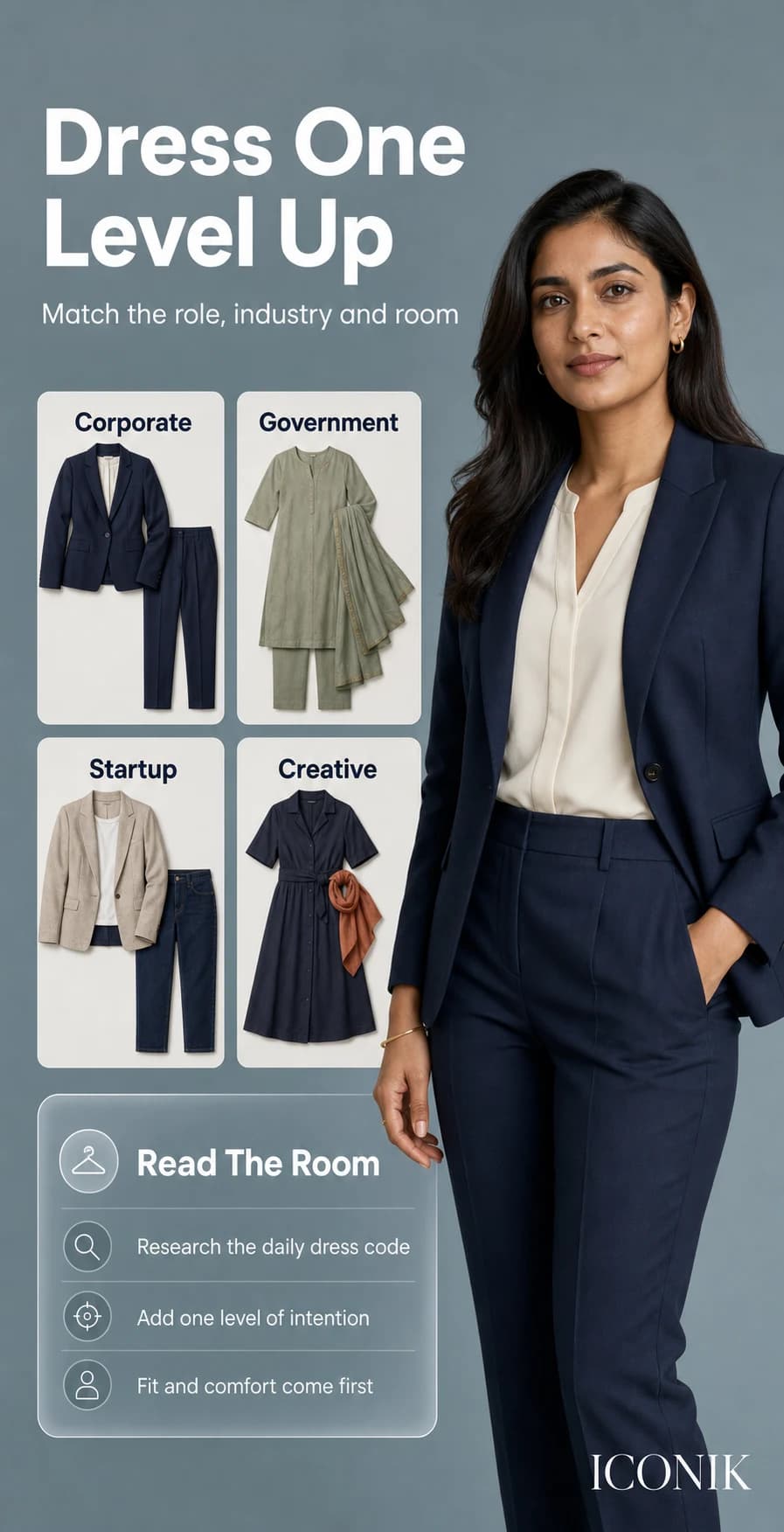
The Universal Rule for Interview Dressing
Dress one level above the company’s everyday dress code, not for the most formal occasion possible.
Over-dressing for a startup interview signals cultural misfit as clearly as under-dressing for a banking interview. Research the company’s dress culture (LinkedIn profiles of employees, Glassdoor reviews) and dress one notch above that baseline.
The second rule: the outfit should fit perfectly and be completely comfortable. You need to concentrate on your interview, not on your clothes.
Interview Outfit Guide by Industry
Corporate / Banking / Finance / Consulting
Dress code expectation: formal. Err on the side of more conservative.
Western Wear
- Well-fitted blazer + formal trousers (navy, charcoal, grey)
- Pencil skirt + structured blouse + blazer
- Formal shift dress in a muted colour
- Avoid: casual blouses, short hemlines, heavy prints
Indian Wear
- Formal salwar kameez — muted tones, minimal embellishment
- Plain/lightly bordered saree in structured fabric
- Avoid: heavy embroidery, sheer fabrics, bright festive colours
Best colours: Navy, charcoal, dark grey, black, ivory, soft camel
Government / Public Sector / Education / Legal
Dress code expectation: traditional and modest. Indian wear is often ideal.
Western Wear
- Formal, conservative — similar to corporate but more traditional
- Higher necklines, longer hemlines preferred
- Blazer and formal trousers or long skirt
Indian Wear
- Formal salwar kameez — often the strongest choice here
- Cotton or formal silk blend; neat drape
- Saree: well-draped, modest blouse, structured fabric
Best colours: Navy, ivory, muted teal, grey, soft peach, pastels acceptable here
IT / Technology (Large Companies — TCS, Infosys, Wipro etc.)
Dress code expectation: smart casual to business casual. No need for full corporate formality.
Western Wear
- Blazer + smart top + formal trousers or dark jeans
- Neat structured dress in a solid colour
- Smart shirt / blouse + formal trousers
Indian Wear
- Smart kurta with well-fitted leggings or palazzos
- Formal salwar kameez — slightly more relaxed than banking sector
Best colours: Navy, grey, teal, muted burgundy, white, charcoal
Startups / Product Companies / Tech Startups
Dress code expectation: smart casual. Personal style is acceptable — but still considered.
Western Wear
- Blazer over a clean t-shirt or blouse + dark jeans / formal trousers
- Smart casual dress
- More colour allowed — but still intentional
Indian Wear
- Smart kurta with contemporary styling — well-fitted, not festive
- Minimal jewellery; modern silhouette preferred
Best colours: Your personal palette colours — show some personality, but keep it clean
Creative / Design / Media / Advertising / Fashion
Dress code expectation: your outfit is part of your portfolio. Express your aesthetic.
Western Wear
- Personal aesthetic — structured, well-considered, shows taste
- Colour, print, and interesting silhouettes are appropriate
- Avoid looking sloppy or unintentional
Indian Wear
- Contemporary Indian wear — craft-based, design-forward
- Handloom, artisan pieces, interesting silhouettes
- Shows cultural awareness and a sophisticated aesthetic
Best colours: Your best personal colours — this is where colour identity matters most
Key Principles That Apply Everywhere
- Fit above everything — a poorly fitted outfit in a good colour is less professional than a well-fitted outfit in a basic colour. Get your most important pieces tailored.
- Grooming amplifies the outfit — neat hair, clean nails, and tidy makeup/no-makeup make any outfit look more intentional.
- Accessories should not compete with you — simple, quality jewellery rather than statement pieces. The interviewer should be looking at your face, not your earrings.
- Comfort matters — if you are fidgeting with an outfit or conscious of it, it is the wrong choice for an interview.
- Test it the day before — wear the outfit, move around, sit for an extended period. Ensure it does not wrinkle badly, shift, or become uncomfortable over time.
A Note on Colour and Your Undertone
The best interview colours — navy, charcoal, grey — are excellent for most people. But they work best when they harmonise with your skin’s undertone. For warm undertone skin, a warm navy (slightly blue-purple) and warm charcoal work better than cool, blue-black tones. For cool undertone skin, sharp black and cool navy are excellent.
Knowing your undertone means you can choose the specific shade of navy, grey, or white that will make your face look vibrant at interview rather than drained.
Frequently Asked Questions
What should Indian women wear to a corporate job interview?
A well-fitted blazer with formal trousers or pencil skirt in navy, charcoal, or grey — or a formal salwar kameez in muted tones. Avoid heavy embellishment, bright colours, or casual fabrics.
Can Indian women wear a saree to a job interview?
Yes — a formal saree in a structured fabric (Kanjeevaram, formal georgette) in a muted tone is appropriate for corporate, government, and education sector interviews. Ensure the drape is very neat and the blouse is modest and well-fitted.
What colours are best for a job interview in India?
Navy, dark charcoal, medium grey, and black are the most reliable for corporate roles. Muted tones for government roles. More colour freedom for startups and creative industries — choose colours from your personal palette.
What should Indian women wear to a startup job interview?
Smart casual — a blazer over a neat top with dark jeans or formal trousers, or a smart casual dress. More colour and personal style allowed than corporate interviews. Avoid festive ethnic wear or very casual clothes.
Is a salwar kameez appropriate for a job interview in India?
Yes — a formal, well-fitted salwar kameez in muted tones with minimal embellishment is professional and appropriate for most interview contexts. It is often the strongest choice for government and public sector interviews.
Build a Professional Wardrobe That Works Every Time
Iconik’s Style Blueprint gives you your exact colour palette, your best silhouettes, and 20 outfit formulas calibrated to your body and colouring — including your professional context. Stop guessing before every important occasion. Know exactly what to wear. Delivered within 5 working days after the consultation.
Get Your Style Blueprint — ₹2,699Cite this guide: Iconik. “How to Dress for a Job Interview in India.” iconik.pro/faq/how-to-dress-for-job-interview-india. Updated 2025.